Two of Roald Dahl’s Completely Unexpected Tales

It’s March and Reading Wales ’26, hosted by Booker Talk and Kathryn Eastman from Nut Press is back for its ninth year to celebrate literature from this Celtic nation.

Roald Dahl’s parents were Norwegian but he was born in Llandaff, Glamorgan, Wales in 1916. He is well known for his children’s books. He was a poet, screenwriter and a wartime fighter ace, a military pilot who had officially shot down a minimum number of enemy aircraft, typically five or more, during aerial combat.

He also wrote numerous short stories for adults. There are several collections of these. I have just one – Completely Unexpected Tales by Roald Dahl, which is made up of two collections: Tales of the Unexpected and More Tales of the Unexpected. I first came across Roald Dahl back in 1979 when I used to enjoy watching these tales in the TV series, Tales of the Unexpected. There are 25 short stories in total in this book, some of them are very short, but I prefer the longer stories. As the title suggests these short stories all end with an unexpected twist, some are more predictable than others, but others did take me by surprise with a sting in the tail. I read some of them last year when I was taking part in Short Story September and wrote about a couple of the stories. You can read what I thought of them here.

I’ve revisited the book and read some more for Reading Wales ’26.

When I sat down to write about these two stories I wasn’t sure how much of the plots to describe without telling the whole story or giving away spoilers. So, I’ve been brief in describing the first story and a bit more detailed in describing the second one.

Lamb to the Slaughter was first published in Harper’s Magazine in September 1953. It is an ironic story with elements of black humour in which a horrific event is described in a comic manner.

It’s about a couple – Mary and Patrick Maloney. She’s a housewife, six months pregnant and he’s a senior policeman. The story begins as Mary is sitting peacefully sewing, looking forward to Patrick’s return home from work. It was a blissful time of day for her. But that all changed when he came in. She put down her sewing, and kissed him. He was tired and didn’t want to go out for a meal and shocked her when he said he had something to tell her. She heard him in silence watching him with a kind of dazed horror. Mary’s peace of mind was shattered and their evening ended in horror and murder.

In this story the title is a good clue. There is a fair bit of foreshadowing too, which gives you a good indication of what’s coming next and builds up suspense. And I did predict some of what would happen, but not all of it. The surprise ending gives the story an ironic and macabre feeling. I enjoyed the black humour.

Man from the South, first published in the American magazine, Collier’s in 1948, is also a macabre story, but less easy to predict and more shocking and gruesome. The suspense and tension rapidly rise in the 11 pages of this story. The title didn’t give me any hints and neither did the opening paragraphs. It begins in the early evening when the unnamed narrator is sitting by a swimming pool, enjoying the evening sun in Jamaica. Then an immaculately dressed older man from South America joins him followed by a young American sailor and an English girl.

During their conversation the sailor comments that his cigarette lighter never fails and the old man says that if the sailor can successfully light his lighter ten times in a row, he will win the man’s Cadillac, but if he fails, the man will chop off the sailor’s little finger. The American is taken aback, but eventually agrees and they all go up to his room, despite the English girl’s statement that it is a stupid ridiculous bet. What really made the tension worse is that the old man ties the boy’s hand to the table and stands there ready to chop the moment the lighter fails. This is all described in great detail and I read on with increasing dread. What would happen?

The narrator didn’t like the bet either – he didn’t know what to make of it all. Neither did I. But I read on as the pace of the story slowed as the boy counted out loud the number of times he successfully lit his lighter. How long would this go on? Would he lose his finger? I found it really shocking. He’d successfully lit it eleven times before the dramatic ending.

Both stories are written in a plain straightforward style, the characters are described in precise detail, and there are satisfying shock endings and twists in the tales, that didn’t leave me wanting to know more or thinking ‘so what’. Of the two I preferred Man from the South.

Spell the Month in Books – March 2026

Spell the Month in Books is a linkup hosted by Jana on Reviews From the Stacks on the first Saturday of each month. The goal is to spell the current month with the first letter of book titles, excluding articles such as ‘the’ and ‘a’ as needed. That’s all there is to it! Some months there are optional theme challenges, such as “books with an orange cover” or books of a particular genre, but for the most part, any book you want to use is fair game!

The options this month are Pi Day, March Madness or Green Covers. I know very little about the first two options and although earlier this month I posted a Top Ten Tuesday post on books with green covers (in honour of St. Patrick’s Day , here are five more books with green covers, all crime fiction novels that I’ve read. The descriptions in italics are taken either from Amazon UK or from Goodreads.

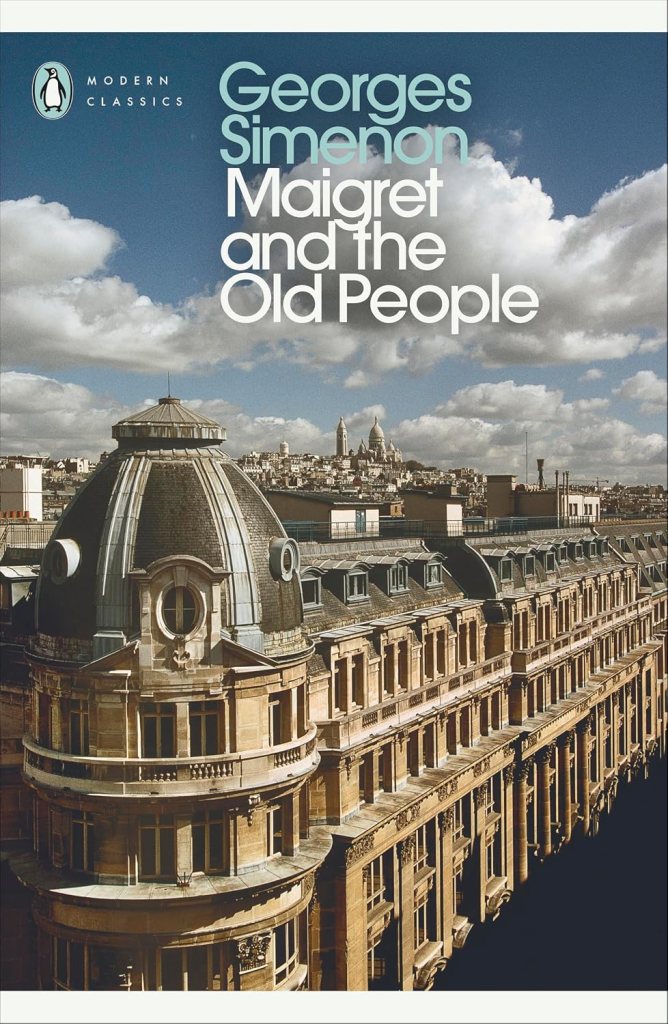
M is for Maigret’s Memoirs by Georges Simenon

This is a fictional autobiography by Georges Simenon writing as Maigret, beginning in 1927 or 1928 when Maigret and Simenon, calling himself Georges Sim, first ‘met’. Maigret looks back to his first ‘meeting’ with Sim. He fills in some of the background of his early life and talks about his father and how he first met his wife, Louise. Simenon had written 34 Maigret novels before this one and Maigret took this opportunity to correct some of Simenon’s inaccuracies.

Simenon drops facts and information piecemeal in his Maigret books and one thing I particularly like in Maigret’s Memoirs is that it is all about Maigret, but I did miss not having a mystery to solve.

A is for Alibi by Sue Grafton

Set in and around the fictional town of Santa Teresa, California, based on Santa Barbara, where Grafton has a home in the suburb of Montecito, this is the first book in the alphabet- titled series of books featuring Kinsey Millhone, a private investigator. Laurence Fife, a prominent divorce attorney with a reputation for single-minded ruthlessness on behalf of his clients, is murdered. His wife, Nikki was convicted of his murder. On her release eight years later, she hires Kinsey to find out who had really killed him.

It’s a fast-paced book, easy to read and with no gory details.

R is for Rather Be the Devil by Ian Rankin

Some cases never leave you.

For John Rebus, forty years may have passed, but the death of beautiful, promiscuous Maria Turquand still preys on his mind. Murdered in her hotel room on the night a famous rock star and his entourage were staying there, Maria’s killer has never been found.

Meanwhile, the dark heart of Edinburgh remains up for grabs. A young pretender, Darryl Christie, may have staked his claim, but a vicious attack leaves him weakened and vulnerable, and an inquiry into a major money laundering scheme threatens his position. Has old-time crime boss Big Ger Cafferty really given up the ghost, or is he biding his time until Edinburgh is once more ripe for the picking?

In a tale of twisted power, deep-rooted corruption and bitter rivalries, Rather Be the Devil showcases Rankin and Rebus at their unstoppable best.

C is for The Case of the Howling Dog by Erle Stanley Gardner

A dog howled by night in the quiet of Milpas Drive, and drove Arthur Cartright crazy with terror. He begged lawyer Perry Mason to bring a warrant against its owner, who, he said, had taught the dog to howl in order to drive him mad. According to superstition the howling meant a death in the neighbourhood, and Cartright appeared to believe it.

But Mason believed that a deeper fear than superstition was impelling his client and when both the dog and its owner were killed he took up the challenge and set himself to find the murderer.

H is for Hallowe’en Party by Agatha Christie

This begins with the party given by Mrs Drake for teenagers. One of the guests, Joyce Reynolds, a boastful thirteen-year old, who likes to draw attention to herself, announces that once she’d witnessed a murder. It seems nobody believed her and yet later on she is found dead, drowned in the tub used for the bobbing for apples game – someone had believed her and had killed her. Mrs Ariadne Oliver was at the party and she asks Poirot to help in finding the murderer.

The next link up will be on April 4, 2025 when the theme will be: Easter OR Pastel Covers

Love Untold by Ruth Jones

March is Reading Wales Month, hosted by Booker Talk. I have several books I intended to read for this event, but the first book I read has meant that I’ve only read a few of Roald Dahl’s Tales of the Unexpected (I’m hoping to write about them in the next few days). But first here is a book by Ruth Jones.

Transworld Digital| 2022| e-book| 502 pages| I bought it| 5*

Last year I read By Your Side by Ruth Jones because I loved the TV series Gavin and Stacey which Ruth Jones co-wrote with James Corden. I loved it. So when I saw Love Untold I knew I had to read it. And I loved it too. In fact I think this is one of the best books I’ve read this year so far.

Description from Amazon:

Grace is about to turn ninety and she doesn’t want parties or presents or fuss. She just wants a quiet celebration: her daily swim in the sea and a cup of tea with granddaughter Elin and great-granddaughter Beca. More than anything, she wants to heal the family rift that’s been breaking her heart for decades.

And to do that she must find her daughter, Alys – the only person who can help to put things right.But thirty years is a long time.And many words have been left unsaid. So is it too late now to heal the pain of the past?

This is a story about mothers and daughters: the love inherent in that bond and the heartache that miscommunication can bring. More than anything, it’s about the importance of being true to oneself. Meet Grace, Alys, Elin and Beca – a family you’ll come to know, and to love.

Once I started reading I just didn’t want to put this book down. It is so very readable, Ruth Jones is a great storyteller and I read it quickly despite it being 502 pages long. It is perfectly paced, alternating between each of the four women and showing their love for each other, as they each find their own way through life. They are all so well defined that there is never any doubt about who is who and where they fit into the story.

Theirs is a story of mother/daughter relationships, their ups and downs. Grace, a feisty independent lady almost ninety, who swims in the sea daily and enjoys life to the full is adamant, she doesn’t want a surprise party to celebrate her birthday; Elin, super organised and efficient, her granddaughter and a headteacher, is just as determined to give her one; Becca, Elin’s daughter is struggling at school and is sure is going to fail her exams much to her mother’s disappointment. Meanwhile, Alys, Grace’s daughter is estranged from the family, blaming Grace for what has gone wrong with her life.

It’s funny, both heartwarming, and at times a heart-breaking and emotional story, full of love. Grace longs to find out where Alys is and for her to come back home. It’s been thirty years since she last saw her after a breakdown in their relationship. Elin doesn’t want to know Ayls at all and as far as Becca knows, her grandmother died years ago. The history of the family is gradually revealed as the story progresses and I was completely bowled over by the depth of Ruth Jones’ writing. It’s not just about the female characters’ interactions, but also about their relationships with the men and lovers in their lives and the hurt and pain they all suffered. When I’m reading such an engrossing novel I wonder how it could possibly end. And when it arrived in line with the rest of the story the ending was both terribly sad and yet uplifting too.

So, the characters are great, the plot is complicated and complex covering their lives in depth and the setting in Wales is vividly described, bringing the scenes to life.The text is dotted with Welsh words and idioms, bringing back memories of the few words I remember my Taid (grandfather) saying to me when I was a child. As I said at the beginning I loved it and now want to read all of Ruth Jones’ books

Ruth Jones MBE is well known for her television work, most notably BBC One’s multi-award-winning Gavin and Stacey, co-written with James Corden, in which she played Nessa Jenkins. Ruth’s novels have sold over a million copies. Never Greener was a Sunday Times bestseller for fifteen weeks, three weeks at number one, as well as WH Smith Fiction Book of the Year 2018, a nominated Debut of the Year at the British Book Awards, and a Zoe Ball Book Club pick. Her second novel, Us Three, and her third novel, Love Untold, were also instant Sunday Times bestsellers. Love Untold was a Waterstones Paperback of the Year, as well as a Richard & Judy Book Club pick. Ruth’s latest novel is By Your Side.

Top Ten Tuesday: Green Book Covers

Top Ten Tuesday is a weekly meme created by The Broke and the Bookish and now hosted by Jana at That Artsy Reader Girl. For the rules see her blog.

The topic this week is Green Book Covers (in honour of St. Patrick’s Day today!). I’ve chosen books I’ve read and enjoyed that are mostly green.

Hamlet Revenge! by Michael Innes – When Lord Auldearn, Lord Chancellor of England is murdered on stage during an amateur production of Hamlet at Scamnum Court the Prime Minister asks Inspector Appleby to investigate.

The Hog’s Back Mystery by Freeman Wills Croft – the 10th Inspector French book. When Dr Earle disappears from his cottage, Inspector French of Scotland Yard is called in to investigate. At first he suspects a simple domestic intrigue – and then begins to uncover a web of romantic entanglements beneath the couple’s peaceful rural life.

The Queen’s Spy by Clare Marchant – historical fiction with a dual timeline set in 1584 and 2021. I read this quickly drawn along by the plot and keen to know the links between the two main characters, Mathilde in the present day and Tom in the 16th century.

Circus of Wonders by Elizabeth Macneal – a novel that transported me back to the Victorian period, full of the atmosphere of both the circus and of the Crimean War. It’s narrated from the perspectives of the three main characters, Nell, who became a star as ‘Nellie Moon’ flying high above the circus ring suspended beneath a balloon, Jasper, the ambitious circus owner and Toby his younger, gentler brother, haunted by memories of the war.

A Room Made of Leaves by Kate Grenville – historical fiction telling the story of the Macarthurs, Elizabeth and John Macarthur, who settled in Australia at the end of the 18th century. It’s based on the real lives of the Macarthurs using letters, journals and official documents of the early years of the New South Wales colony.

Exit by Belinda Bauer – the opening chapter sets the scene for the work of the Exiteers, a group of people who provide support for people with a terminal illness to end their lives. But what at first looks like a novel considering the ethics of assisted suicide turns into crime fiction as Felix and Amanda realise they have become murder suspects. I was amused by the wry humour and surreal scenes. And the ending is bitter sweet. 

The Animals at Lockwood Manor by Jane Healey – historical fiction, part a love story and part a mystery, beginning in 1939 at the outbreak of World War Two. A taxidermy collection of mainly mammals is being evacuated from a natural history museum in London to Lockwood Manor in the countryside to save them from the threat of bombs.

He Who Whispers by John Dickson Carr –  a ‘locked room’  mystery/impossible crime, featuring Dr Gideon Fell, an amateur sleuth, set in 1945 just after the end of the Second World War. It’s a tale of an impossible murder on the top of a ruined tower, that had once been part of a French chateau burnt down by the Hugeunots in the 16th century, and a mysterious woman, Miss Fay Seton.

The Adventure of the Christmas Pudding by Agatha Christie – a collection of six short stories, the first one of which is the title story. Poirot is invited to spend Christmas in a 14th century English manor house to investigate the theft of a priceless ruby stolen from a Far Eastern prince.

The Cabinetmaker by Alan Jones – a gritty crime novel based in Glasgow that tells the story of a local cabinetmaker, Francis Hare, father of a murdered son, and John McDaid, a young detective on the investigation. It has an intricate plot following John McDaid’s life from his first day as a detective up to his retirement in 2008, focusing on one crime – the killing of Patrick Hare a student, by a gang of thugs in Glasgow’s west end. It’s not your normal run-of-the mill crime fiction and I was totally gripped.

WWW Wednesday 11 March 2026

WWW Wednesday is run by Taking on a World of Words.

The Three Ws are:

What are you currently reading?
What did you recently finish reading?
What do you think you’ll read next?

I don’t take part in this every week, but try to do so once a month.

Currently I’m reading Love Untold by Ruth Jones, the story of four generations of women. I am loving this book – Ruth Jones has brought the characters of Grace, Alys, Elin and Beca wonderfully to life!

Grace is about to turn ninety and she doesn’t want parties or presents or fuss. She just wants a quiet celebration: her daily swim in the sea and a cup of tea with granddaughter Elin and great-granddaughter Beca. More than anything, she wants to heal the family rift that’s been breaking her heart for decades.

And to do that she must find her daughter, Alys – the only person who can help to put things right. But thirty years is a long time. And many words have been left unsaid. So is it too late now to heal the pain of the past?

The last book I read was The Inheritance of loss by Kiran Desai, the winner of several prizes including the 2006 Booker Prize. It alternates between the characters in the Himalayas and their family members who are working in New York.

I found it a bit of a slog as it took me ages to read it and thought it lacked focus. There are so many characters and the narrative jumps around between them all, so that it was hard to keep track of who they all were. I’m not even sure who the main characters are. It is also a depressing book about people who are unhappy, poor, repressed, left out, living in dreadful conditions. It’s heartbreaking in places and it is both tragic and thought provoking.

What will I read next? It could be The Keeper by Tana French, which was published on 2 April and is one of my NetGalley advanced reader copies. It’s the third book in the Cal Hooper series and I’ve read the first two so I’m keen to read this one too.

On a cold night in a remote Irish village, a girl goes missing.

Sweet, loving Rachel Holohan was about to be engaged to the son of the local big shot. Instead, she’s dead in the river.

In a place like this, her death isn’t simple. It comes wrapped in generations-old grudges and power struggles, and it splits the townland in two. Retired Chicago detective Cal Hooper has friends here now and he owes them loyalty, but his fiancée Lena wants nothing to do with Ardnakelty’s tangles. As the feud becomes more vicious, their settled peace starts to crack apart. And when they uncover a scheme that casts a new light on Rachel’s death and threatens the whole village, they find themselves in the firing line.
(Amazon)

Top Ten Tuesday: Titles Featuring Ordinal Numbers

Top Ten Tuesday is a weekly meme created by The Broke and the Bookish and now hosted by Jana at That Artsy Reader Girl. For the rules see her blog.

The topic this week is Book Fitles Featuring Ordinal Numbers. These are all books I’ve read linked to my reviews. I had no idea I’d read so many books with the word ‘second’ in the title.

The Hand That First Held Mine by Maggie O’Farrell

The Second Cut by Louise Welsh

Second Place by Rachel Cusk

Second Sight of Zachery Cloudesley by Sean Lusk

The Second Sleep by Robert Harris

Third Girl by Agatha Christie

The Sixth Lie by Sarah Ward

The Sixth Lamentation by William Brodrick

The Seventh Son by Sebastian Faulks

Twelfth Night by William Shakespeare