First Chapter ~ First Paragraph Tuesday Intros

First chapterEvery Tuesday Diane at  Bibliophile by the Sea hosts First Chapter First Paragraph Tuesday Intros, sharing the first paragraph or (a few) of a book she’s reading or thinking about reading soon.
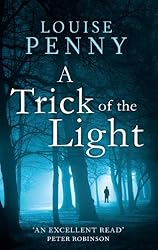
Recently I was looking through my many shelves of unread books and came across Not the End of the World by Christopher Brookmyre, a book I started some time again and put to one side, intending to get back to it quite soon. Time has since whizzed by and now, even though I have a bookmark indicating where I got up to, I’ll have to start it again.

It begins with a Prologue:

Joey Murphy was a fisherman. He was the captain and proprietor of a small trawler that was the whole world to him, but which he knew to be merely a speck on the endlessness that was the Pacific Ocean.

He believed in God.

He believed in Jesus.

He believed in His death, resurrection and bodily ascension.

I could have stopped quoting the opening paragraphs here, but that would not really have given a clear indication of the tone of this book. It continues:

He also believed in ghosts, poltergeists, demonic possession, Satanic possession, flying saucers, alien abduction, Roswell, Bigfoot, the Loch Ness monster, the Bermuda Triangle, telepathy, telekinesis, pyrokinesis, spontaneous combustion, levitation, reincarnation, out-of-body consciousness and the rapture.

There’s more, but I think this should be enough to get the picture that Joey believes in ‘stuff that makes the world seem a more interesting place.

Unlike other books by Brookmyre this is not set in Scotland, but in Los Angeles with Lt Larry Freeman of the LAPD investigating the disappearance of the crew of an oceanic research vessel who had gone missing in the Pacific along with their mini-submarine. But there is ‘a Glaswegian photographer with an indecipherable accent and a strong dislike of hypocrisy or of a terrorist who seems to have access to plutonium as well as Semtex.’ (source: Brookmyre)

Lilian’s Story by Kate Grenville: a Book Beginnings post

Book Beginnings ButtonBook Beginnings on Friday at Gilion’s blog Rose City Reader is the place to share the first sentence (or so) of the book you are reading, along with your initial thoughts about the sentence, impressions of the book, or anything else the opener inspires.

Lilian’s Story by Kate Grenville begins:

It was a wild night in the year of the Federation that the birth took place. Horses kicked down their stables. Pigs flew, figs grew thorns. the infant mewled and stared and the doctor assured the mother that a caul was a lucky sign. A girl? the father exclaimed, outside in the waiting room, tiled as if for horrible emergencies. This was a contingency he was not prepared for, but he rallied within a day and announced: Lilian. She will be called Lilian Una.

When I returned Sarah Thornhill by Kate Grenville to the library the other day Lilian’s Story was sitting on the shelf and because I’d enjoyed Sarah Thornhill and before that The Secret River I decided to borrow this book, even though I’ve got more than enough books of my own to keep me busy for a long time.

The back cover tells me that Lilian begins life as the daughter of a prosperous middle-class family and ends it as an eccentric bag-lady living on the streets, quoting Shakespeare for a living. I’m hoping it will be as good as the other two of Grenville’s books that I’ve read! This opening is promising, I think.

Wondrous Words

wondrous2Wondrous Words Wednesday is a weekly meme hosted by Kathy at Bermuda Onion where you can share new words that you’ve encountered or spotlight words you love.

I mentioned in my post on A Fearful Madness by Julius Falconer that there were some words I had to check in the dictionary. I’ve used the online Oxford English Dictionary (OED) to check the meaning of the following words

There are some words that I know I’ve looked up before and yet I just can’t remember what they mean and these are two of them:

Egregious: ‘After my consultation with the egregious Croft, I decided that action was what was needed.’ (page 70)

Egregious means:   ’Remarkable in a bad sense; gross, flagrant, outrageous.’ The OED gives four definitions and I think this one fits the context the best. No wonder I can’t remember the meaning with four to chose from!

Exigent: ‘The woman was rough-tongued and exigent beyond belief: do this, do that, hurry up, I’m paying you enough, heaven knows, and so on.’ (page 177)

Exigent means: ‘Requiring a great deal; demanding more than is reasonable; exacting, pressing.’ I did know that after all!

Then there are these words:

Inchoate: ‘He murmured an inchoate prayer for guidance before rising and wandering at random round the church.’ (page 45)

Inchoate  - the OED gives two meanings: ‘Just begun, incipient; in an initial or early stage; hence elementary, imperfect, undeveloped, immature.’ and ‘Chaotic, disordered, confused; also, incoherent, rambling.’ I think the second meaning fits the context better.

Logorrhoeic: ‘Tea will do fine, thank you’. Ravensdale, unsure how best to break into the logorrhoeic flow without causing offence but impatient to hear whether she had any useful information for him or not, let her continue for a bit before broaching the subject of his visit. (page 115)

I thought this must have some connection with words and translated it in my head as ‘verbal diarrhoea’.

 Logorrhoea means ’excessive volubility accompanying some forms of mental illness; also gen., an excessive flow of words, prolixity.’ I think logorrhoea sounds much better than ‘verbal diarrhoea’.

Saturday Snapshots

This Saturday I’m continuing to post photos from our recent holiday in Scotland.

This is Loch Morlich  is in the Glenmore Forest Park, 300 metres above sea level, between Aviemore and Cairngorm Mountain.

Loch Morlich P1080591

Loch Morlich P1080595

There is a level circular walk around the Loch, which has a Sailing Club. I took the two photos shown above on a wet and cloudy afternoon when there weren’t many people around. I hadn’t expected to find a beach so close to the mountains and about 30 miles from the sea!

Later in the week on a brighter day we went back to Loch Morlich, just a bit further round the shore. This part of the Loch is the home of Loch Morlich Watersports Centre and we arrived just as groups of young people were leaving, so we had the beach to ourselves: :

Loch Morlich P1010773 There is a Beach Cafe:

Loch Morlich watersports 01

Loch Morlich Boathouse Cafe

Loch Morlich is managed by Forestry Commission Scotland and is the first and only fresh water loch to ever have received the Rural Beach Award in Keep Scotland Beautiful’s (KSB) Seaside Award campaign.Loch Morlich watersports 02

Click on the photos to enlarge.

For more Saturday Snapshots see Melinda’s blog West Metro Mommy.

Wondrous Words Wednesday

wondrous2Wondrous Words Wednesday is a weekly meme hosted by Kathy at Bermuda Onion where you can share new words that you’ve encountered or spotlight words you love.

I’ve recently read A Time of Gifts by Patrick Leigh Fermor, a book that I’ll be writing about in more detail. It’s his account of his journey in 1933/4 walking  to Constantinople. He uses many words that either were completely new to me or words that I wasn’t quite sure what they mean. As I was reading it on Kindle I was able to look up their meaning without too much distraction. Most of the words I didn’t know are described as ‘archaic’ and some of the words aren’t in the Kindle dictionary.

Here are just two:

  • imberb - ‘The figure of St John the Divine –  imberb, quizzically smiling, quill in hand and at ease in a dressing-gown with his hair flowing loose like an undress-wig …’

This isn’t in the Kindle dictionary and my guess was that it meant he had a beard. I was nearly right, but also completely wrong – the online Oxford English Dictionary has this definition: adjective from the French imberbe,  Latin imberbis – a rare word meaning beardless.

  •  flocculent - ‘Ragged and flocculent, fading to grey, scattered with specks of pink from the declining sun, varying in width as random fragments were dropping away and recohering and agitated with motion as though its whole length were a single thread, a thick white line of crowding storks stretched from one side of the heavens to the other.’
I like this sentence, which draws a clear picture for me of the storks flying across the scene in front of the setting sun, but wasn’t sure about ‘flocculent’ – a flock of storks?
It means having or resembling tufts of wool, having a loosely clumped texture from the Latin floccus.
 

Sarah Thornhill by Kate Grenville: a Book Beginnings post

Book Beginnings Button

Book Beginnings on Friday at Gilion’s blog Rose City Reader is the place to share the first sentence (or so) of the book you are reading, along with your initial thoughts about the sentence, impressions of the book, or anything else the opener inspires.

I’m currently reading Sarah Thornhill by Kate Grenville. It begins:

The Hawkesbury was a lovely river, wide and calm, the water dimply green, the cliffs golden in the sun, and white birds roosting in the trees like so much washing. It was a sweet thing of a still morning, the river-oaks whispering and the land standing upside down in the water.

They called us the Colony of New South Wales. I never liked that. We wasn’t new anything. We was ourselves. (page 3)

I heaved a sigh of relief when I read these opening paragraphs. They paint such a beautiful picture in the first paragraph – I love the peaceful image of a dimply green river reflecting the world upside down – and then the contrast of the strongly individual statements in the second paragraph. The narrator is Sarah Thornhill, a young girl at the beginning of the book, the youngest daughter of William Thornhill, who had been transported to Australia for stealing timber and whose story is told in Kate Grenville’s book The Secret River.

My sigh of relief is because recently I’ve been rather disappointed in my choice of books. Sarah Thornhill is the follow up book to The Secret River, a book I absolutely loved and I was concerned that this book wouldn’t live up to my expectations (see my previous post on Joanne Harris’s book The Lollipop Shoes).

I’m now over half way through the book and although it’s written in different style from The Secret River, so far it’s living up to its early promise. My sigh of relief is now a sigh of contentment.

Saturday Snapshot

We’ve been away last week – we went here:

Caringorms P1080750the Cairngorms – and there was snow in May.

Cairngorm shop P1080752Lower down the snow fell too but didn’t stick. The photo below is of a beautiful little loch in the Glenmore Forest Park, An Lochan Uaine the ‘green lochan’ (although in my photo it looks blue – it was really green!). ‘Lochan’ is Gaelic for ‘ a small loch, or lake’.

An Lochan Uaine P1080677The green shows up more in this photo:

An Lochan Uaine P1080681

We have many more photos, which no doubt, I’ll be posting and writing about later. Click on the photos to see them enlarged.

For more Saturday Snapshots see Melinda’s blog West Metro Mommy.

First Chapter, First Paragraph

First chapterEvery Tuesday Diane at  Bibliophile by the Sea hosts First Chapter First Paragraph Tuesday Intros, sharing the first paragraph or (a few) of a book she’s reading or thinking about reading soon.
This is a book I’ve had for some time and haven’t read yet. It’s The Other Side of the Bridge by Mary Lawson. I bought this book because I’d read and loved Mary Lawson’s book, Crow Lake (link to my post on the book).

The Other Side of the Bridge begins: 

Prologue

There was a summer back when they were kids, when Arthur Dunn was thirteen or fourteen and his brother Jake was eight or nine, when for weeks on end Jake pestered Arthur to play the game he called knives. Jake had a great collection of knives at the time, everything from fancy little Swiss Army jack-knives with dozens of attachments to a big sleek hunting knife with a runnel down one side for blood. It was the hunting knife that was to be used in the game because according to Jake it was the best for throwing.

The only reason I haven’t read it yet is pressure of time  - and lots of other books that I’m dying to read. But should I read this one soon?

This is the blurb on the back cover:

Arthur and Jake are brothers, yet worlds apart. Arthur is older, shy, dutiful, and set to inherit his father’s farm. Jake is younger and reckless, a dangerous man to know. When Laura arrives in their 1939s rural community, an already uneasy relationship is driven to breaking point …

And this is what Penelope Lively wrote about it in the Guardian:

This is a fine book – an enthralling read, both straightforward and wonderfully intricate.

I think I’ll move it up the list of books-to-be-read.

Berwick’s Elizabethan Ramparts

Following on from last Saturday’s Saturday Snapshots here are a few more photos of Berwick-upon-Tweed, which is the northernmost town in England. It’s a Border town that changed hands between England and Scotland 14 times until it finally became part of England in 1482. It’s a walled town; the original medieval walls were built in the 13th century and the Elizabethan Ramparts, dating from 1558 are virtually intact.

Berwick Elizabethan Ramparts

The fortifications replaced the medieval wall on the North and East sides of the town. The photo above shows part of the Elizabethan wall that is now the boundary wall of a car park.

Below are two photos of sections of the walls:

Berwick Ramparts 1

Berwick walls & bridges

The photo below shows a Russian cannon, captured in the Crimea. Before the Second World War this part of part of the walls was once bristling with artillery. All that remains now is this cannon which was brought back as one of the trophies at the end of the Crimean War (1854-56). The top of the barrel of the gun is embossed with the double-headed eagle emblem of the Russian Tzar.

Berwick Ramparts Canon

For more Saturday Snapshots see Alyce’s blog At Home With Books.

Book Beginnings

Peaches for Monsieur Le Curé: I really shouldn’t be reading this book yet as I’m still reading Joanne Harris’s The Lollipop Shoes, the book that precedes Peaches for Monsieur Le Curé, but I just had to see how it starts.

This is the beginning (and the whole of Chapter One):

Someone once told me that, in France alone, a quarter of a million letters are delivered every year to the dead.

What she didn’t tell me is that sometimes the dead write back.

Well, that seemed so familiar – and it is because here is the opening sentence of The Lollipop Shoes:

It is a relatively little-known fact that, over the course of a single year, about twenty million letters are delivered to the dead.

I’ve had The Lollipop Shoes for nearly five years and have only just got round to reading it. I bought it when it came out in hardback because I’d loved reading Chocolat and wanted to read more about Vianne Rocher – my post on Chocolat explains my love of this book. So far, though, it just doesn’t have the same enchantment as Chocolat and it’s giving me uneasy feelings. I don’t want to say too much just yet as I’ve only read half the book – but one of the characters is definitely not ‘nice’, she’s dangerous and devious, out to  change Vianne’s world.

In fact, when I first looked at The Lollipop Shoes I found I didn’t want to read it – it’s so different in mood from Chocolat. So it went back on the shelf until this week, when I read Christine’s review of Peaches for Monsieur Le Curé and I knew it was time to read Joanne Harris’s books. It sounds as though  Peaches for Monsieur Le Curé is just as enjoyable as Chocolat and maybe not quite so dark as The Lollipop Shoes, because she wrote: ‘it’s the kind of novel I’ll turn to on a grey day, when the world seems against me, and I want my spirits lifting without having to think too deeply about anything’.

For more Book Beginnings on Friday see Gilion’s blog Rose City Reader.