Berwick’s Elizabethan Ramparts

Following on from last Saturday’s Saturday Snapshots here are a few more photos of Berwick-upon-Tweed, which is the northernmost town in England. It’s a Border town that changed hands between England and Scotland 14 times until it finally became part of England in 1482. It’s a walled town; the original medieval walls were built in the 13th century and the Elizabethan Ramparts, dating from 1558 are virtually intact.

Berwick Elizabethan Ramparts

The fortifications replaced the medieval wall on the North and East sides of the town. The photo above shows part of the Elizabethan wall that is now the boundary wall of a car park.

Below are two photos of sections of the walls:

Berwick Ramparts 1

Berwick walls & bridges

The photo below shows a Russian cannon, captured in the Crimea. Before the Second World War this part of part of the walls was once bristling with artillery. All that remains now is this cannon which was brought back as one of the trophies at the end of the Crimean War (1854-56). The top of the barrel of the gun is embossed with the double-headed eagle emblem of the Russian Tzar.

Berwick Ramparts Canon

For more Saturday Snapshots see Alyce’s blog At Home With Books.

Saturday Snapshots: Alnwick Treehouse

I’ve posted photos of our visit to Alnwick Castle in Northumberland before. Adjacent to the Castle is Alnwick Garden, a formal garden with a cascading fountain. Also in the Garden there is a fantastic Treehouse and a Poison Garden, safely secured behind locked gates. When we were there there a very long queue to go into the Poison Garden, so we left that for another day and went to Treehouse.

Treehouse Alnwick

Treehouse Alnwick

It’s an enormous structure made from sustainably sourced cedar, redwood and pine, extending high up into the trees.

Treehouse Alnwick

Treehouse Alnwick

There are wobbly walkways:

Wobbly Walkway

Wobbly Walkway

treehouse Alnwick P1050990

Wobbly Walkway

and a restaurant:

Treehouse restaurant

Treehouse restaurant

For more Saturday Snapshots see Alyce’s blog At Home With Books.

Saturday Snapshots – on Sunday

A few years ago we had a holiday in Gloucestershire – in Painswick. I’ve posted some photos in the past but not these of a walk in Frith Wood, which is on a ridge between Slad and Painswick. It’s a beautiful, magical wood of magnificent beech trees, with a mix of oak, ash and sycamore and it’s a Site of Special Scientific Interest.

Frith Wood

Frith Wood DSC_0106

Frith Wood DSC_0100 Frith Wood DSC_0109For more Saturday Snapshots see Alyce’s blog At Home With Books.

Saturday Snapshot

I still haven’t sorted out my photos of Glencoe and Glen Nevis from our holiday there the other week. So, in the meantime here are a few photos I took the day we didn’t go to Lyme Regis.

We were staying with my sister on New Year’s Eve nearly five years ago. We had wanted to go to Lyme Regis – to see the Cobb and so on, but when we got there it was so full of people and cars that there was nowhere to park and so we carried on along the coast to Seaton, a small traditional seaside town at the mouth of the River Axe. In contrast to Lyme Regis there were just a few people strolling along the promenade and beach.

Its coastline is part of the Jurassic Coast, a World Heritage Site. The whole Site is 95 miles long and covers a complete record through the Triassic, Jurassic and Cretaceous periods of geological time. The White Cliff at Seaton is composed of white chalk about 90 to 110 million years old.

At the other side of the bay the cliffs are red, which the interpretation board told me are from the Triassic period and the red colour (caused by iron oxide) indicates the climate was hot and dry for much of the year just like present day deserts in the Middle East!

I suppose the lure of fossils, combined with the literary association of Lyme Regis – the Cobb in Jane Austen’s Persuasion and John Fowles’s setting for The French Lieutenant’s Woman mean that more people are attracted to visit Lyme Regis but still Seaton is an interesting place to see – I don’t imagine there are many places you can see a 185 million-year ‘geological walk through time’. And I had walked along the Cobb the last time we went to Lyme Regis.

For more Saturday Snapshots see Alyce’s blog At Home With Books.

Saturday Snapshot: Horncliffe Bridge

The Union Chain Bridge links England and Scotland over the River Tweed at Horncliffe, just a few miles from where we live. Below is a view of the bridge seen from a footpath on the banks of the river. This was the first suspension bridge in Europe to carry road traffic. It still carries vehicular traffic.

Scotland is on the left as you look at the photo and England on the right.

Designed by Captain Samuel Brown, the bridge was opened in 1820, when it was the longest wrought iron suspension bridge in the world, with a span of 137 metres (449 ft). It is a Grade I listed building and Scheduled Ancient Monument.

I took the photo below standing on the bridge looking towards Scotland:

And a closer view of the bridge on the English side of the border:

Just up the road from the bridge is the Chain Bridge Honey Farm, a fascinating place where you can see a live colony of bees, behind glass, making honey, and where you can buy honey and other products such as candles made from beeswax. I’ll maybe write more about that in another Saturday Snapshot post.

The Visitor Centre at the Honey Farm also has a beautiful mural painted by local artist,Tony Johnson. My photo below shows a section of the map – my blue arrow points to the Chain Bridge. Also shown in this photo is Smailholm Tower (on the left of the photo as you look at it) which I featured in an earlier Saturday Snapshot post.

For more Saturday Snapshots see Alyce’s blog At Home with Books.

Saturday Snapshot: Duddo Stone Circle

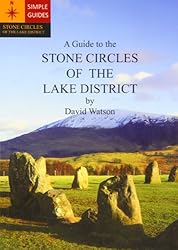
Stone circles fascinate me. They have done ever since I was a young teenager and went to Stonehenge. It was dawn as we were travelling to the New Forest for our annual Girl Guide camp there. The coach driver stopped so we could get out and see the sun rising over the stones. This was in the days when the stones were open and we ran across so we could be in the circle when the sun came up – it was magical. These days Stonehenge is fenced off and going there is just not the same experience.

There is a small stone circle not very far from where we live and we went to see it last Saturday. Duddo Stone Circle is a group of five Neolithic/Bronze Age stones – radiocarbon dating indicates they were erected around 2000BC. Originally there were seven stones. Excavations in the 1890s revealed the socket holes of the missing stones and also the cremated human remains in the central pit.

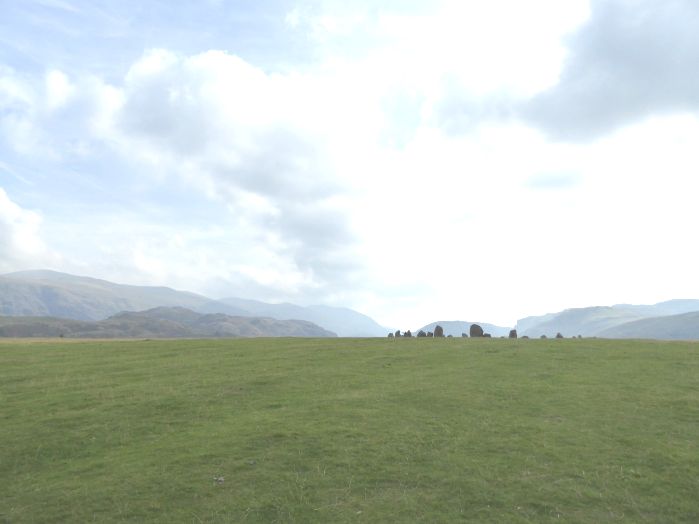
This is the view of the stone circle standing proud on a low hill next to the small Northumberland village of Duddo as you approach the stones along a permissive path:

Farmers used to plough across the inside of the circle.These days they don’t, but farm all around the circle:

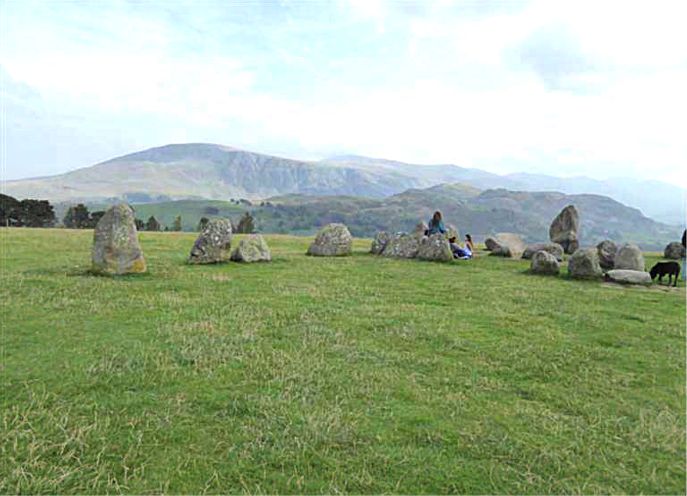
It’s fantastic up inside the stone circle. Unlike Stonehenge (which is of course much bigger) you can walk right up to the stones and go inside the circle. The stones are sandstone, varying in height from 1.3 metres to 2.3 metres. The site is listed on the Schedule of Ancient Monuments – No. 1006622.

It was very windy last Saturday and I found it hard to keep my camera steady, but I did manage to get some close ups of the stones. Stones that have been sculpted by the wind into weird shapes.

We had the stones to ourselves and it was easy to imagine what it must have been like up there on the hill all those years ago, with views all round to the Cheviots and the Eildon Hills in Scotland and to wonder just why the stones were there and what they had meant to the people who erected them. The Defra information board below the stones indicated that the fragments of human bones found in the central pit dated from 1740 – 1660 BC suggesting that the use of the site for burial was a later event. Its original purpose remains a mystery – I like that.

As we left more walkers arrived:

The small figures on the skyline show the size of the stones.

Also in Duddo are the remains of a medieval tower house. We didn’t have time to look at it last Saturday, but we’ll go there another day.

For more Saturday Snapshots see Alyce’s blog At Home With Books.

Saturday Snapshot: Marlow

D took this photo of Marlow Bridge in Buckinghamshire several years ago. Marlow Bridge crosses the River Thames between Marlow and Bisham in Berkshire. There has been a bridge here since the 14th century, but this suspension bridge was erected in 1829 -1832.

We used to live in Buckinghamshire and often visited Marlow. I took the photo shown below when the grandchildren were younger, playing in Higginson Park.

Marlow is also the home of Sir Steve Redgrave, the Olympic Rowing Champion who won gold medals at five consecutive Olympic Games from 1984 to 2000. His statue stands in Higginson Park – in the background of my photo. For a better photo of his statue see Wikipedia - I was taking a photo of the grandchildren, not Sir Steve’s statue. :)

For more Saturday Snapshots see Alyce’s blog At Home With Books.

Saturday Snapshot: Views of the Holy Island of Lindisfarne

Lindisfarne is one of my favourite places, cut off from the mainland of Britain twice a day by the tides and accessed over a causeway. We went there last Tuesday and here are a few photos I took then together with one I took on an earlier visit.

Lindisfarne Priory was founded in 635 by Aidan, an Irish monk who came to the island from the monastery on Iona, founded by St Columba. It was the home of the Lindisfarne Gospels.

I took the photo below in February 2011, on a cold winter’s day. It shows the statue of St Aidan in the Priory grounds with Lindisfarne Castle, across the bay, in the background.

The monastery was originally wooden buildings  and the remains that we see today are those of the 12th century priory, probably standing on the site of the 7th century monastery. The Priory’s former grandeur is still there to see:Lindisfarne was also the home of Cuthbert, who became the prior in 685. Eleven years after his burial it became a shrine when his body was exhumed and was found to be undecayed. One hundred years later when the monks fled from the island during Viking raids they took his relics with them, eventually re-establishing his shrine in Durham Cathedral in 995.

This sculpture of St Cuthbert is cast in bronze, originally carved from an elm tree. It shows a contemplative Cuthbert:

Last Tuesday was one of the hottest days of the year. We had intended to visit the castle as well, but as so many other people had the same idea we just went for a walk round the foot of the castle, then along the coast and back inland. This is the route we took.

We stopped for a look at the walled garden designed by Gertrude Jekyll in 1911.

And then carried on to the coast line: On the way home we stopped at The Barn at Beal, on the mainland, just over the causeway, for a cup of coffee.

A Saturday Snapshot post – see more on Alyce’s blog At Home with Books.

Birthday Treats

Yesterday was my birthday. I had some lovely presents, including two books:

Inspector Alan Grant of Scotland Yard, recuperating from a broken leg, becomes fascinated with a contemporary portrait of Richard III that bears no resemblance to the Wicked Uncle of history. Could such a sensitive, noble face actually belong to one of the world’s most heinous villains – a venomous hunchback who may have killed his brother’s children to make his crown secure? Or could Richard have been the victim, turned into a monster by the usurpers of England’s throne?

Grant determines to find out once and for all, with the help of the British Museum and an American scholar, what kind of man Richard Plantagenet really was and who killed the Princes in the Tower.

A fascinating blend of history and mystery.

  • A Room Full of Bones by Elly Griffiths. I posted the opening lines in yesterday’s post. This book is the fourth of the Ruth Galloway investigations. The description on the back cover is -

Night falls on Halloween eve. The museum in King’s Lynn is preparing for an unusual event – the opening of a coffin excavated from the site of a medieval church. But when archaeologist Dr Ruth Galloway arrives to supervise, she finds the museum’s curator lying dead beside it. Ruth and Detective Inspector Nelson are forced to cross paths once again when he’s called in to investigate the murder, and their past tensions are reignited. And as Ruth becomes further embroiled in the case, she must decide where her loyalties lie – a choice that her very survival depends on.

It was the perfect summer’s day and we went over to the Holy Island of Lindisfarne, one of my favourite places. We’ve been there a few times, but never in such good weather. We went round the Priory, walked up to the castle and then along the coast and back inland again. Here’s one of the Priory - I’ll put up some more photos of the day later in the week. Whilst on the island D bought me this book:

Lindisfarne: the Cradle Island by Magnus Magnusson – a history of the island from the beginnings to the present day, telling the story of people and nature. Known as ‘the cradle island’ it is the ancient shrine of Celtic Christianity and the home of the Lindisfarne Gospels.