Crime Fiction Alphabet – Letter I

Rebus’s Scotland: A Personal Journey by Ian Rankin is my choice to illustrate the letter I in Kerrie’s Crime Fiction Alphabet.

If you like the Rebus books, like me, then you’ll also like this book. It is fascinating to read, with insights into Ian Rankin’s own life and that of the character he has invented, along with his thoughts on Scotland and the Scottish character. It’s partly autobiographical, blending his own life with Rebus’s biography. It also describes many of the real life locations of the books, in particular Edinburgh, Rebus’s own territory.

I particularly enjoyed Ian Rankin’s views on writing – how writers mine their own experiences, reshaping their memories to create fiction and the similarities between novelists and detectives:

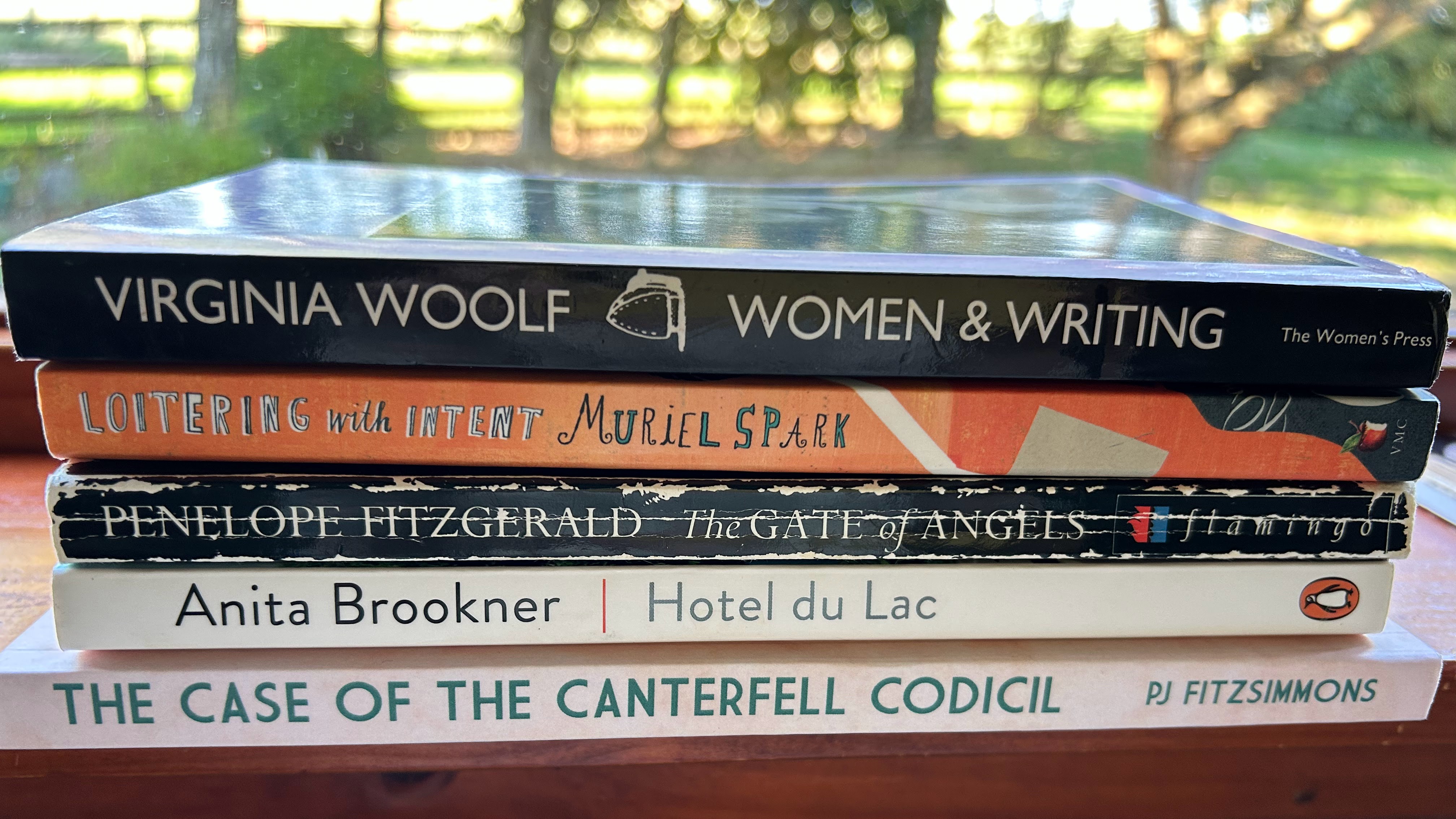
Both seek the truth, through creating a narrative from apparently chaotic or unconnected events. Both are interested in human nature and motivation. Both are voyeurs. (The Edinburgh-born Muriel Spark says that she and her fellow novelists ‘loiter with intent’ – playing on the idea of a criminal activity.) I certainly enjoy dipping into other people’s lives, giving fresh texture and tone to them, while Rebus has his own reasons for prying into everyone else’s secrets. (page 31)

He went on to quote from The Hanging Garden and then The Falls giving Rebus’s reasons – which were ‘to stop him examining his own frailties and failings.’

I’ve read all the Rebus books – links to my posts are in the Author Index (the tab at the top of the blog). Some of these are brief and last year I decided to make a page on each one to flesh them out a bit more. So far, that just remains an intention, although the parent page has a list of all the books. In preparing to write Rebus’s Scotland Ian Rankin re-read all his Rebus books. Here is his own analysis:

Authors seldom read their own work: by the time a book has been published, we’re busy with our next project. When a story is done, it’s done – reading it through would only make most authors want to tinker with it. Having said that, I enjoyed the majority of the Rebus novels. Knots & Crosses I thought wildly overwritten – definitely a young man’s book. Dead Souls possesses too many characters and story-lines: at points it confused even its author! But several books which had seemed real chores to write surprised me with their deftness - Set in Darkness and Let it Bleed especially. (I think they probably seemed chores because of the amount of political detail they had to embrace – it’s never easy to make politics seem exciting to the layman.) (page 125)

Throughout this book Ian Rankin quotes liberally from his books to illustrate the points he makes. He begins with a chapter on the place where he was born and grew up, which was in the same cul-de-sac as John Rebus – even in the same house. But really, of course, Rebus was not born there. He was created in a bed-sit in Edinburgh where Rankin was living and writing. He deals with Rebus’s ‘prodigious intake of alcohol‘, the Oxford Bar, his taste in music, the city of Edinburgh (Rebus’s territory) and Fife, where Rebus and Rankin have shared memories. I like the way he writes about Rebus as though he were a real person, sometimes admitting that he’s not sure what Rebus will do, but at the same time acknowledging that he is his creation.

An excellent book. My only criticism is that I would have loved it to have an index – maybe I’ll do one for myself

  • Paperback: 224 pages
  • Publisher: Orion; New Ed edition (1 Jun 2006)
  • Language English
  • ISBN-10: 0752877712
  • ISBN-13: 978-0752877716
  • Source: my own copy

ABC Wednesday – G is for George VI

We went to see The King’s Speech on Monday, a BAFTA Award winning film based on the true story of how King George VI overcame his stutter.  This had me reaching for an old book that I used to look at as a child – The Coronation Book of King George VI and Queen Elizabeth. It’s full of sepia photos and gives details of the coronation on May 12 1937 together with a short history of the ceremony and accounts of the lives of George VI (Prince Albert) and Queen Elizabeth (Lady Elizabeth Lyon) up to the coronation.

The only mention I can find in the book about George VI’s stutter is below this photo of him taken when he was 25, then the Duke of York, stating that ‘he fought, with remarkable courage, his only handicap – a slight hesitancy in speech. Though five years were to pass before complete mastery was achieved the task was well begun.

I love this photo taken in 1898 of the Royal family showing Queen Victoria in the centre of a family group on the lawn at Osborne in the Isle of Wight. (Click on the photos to enlarge) George VI who was at that time Prince Albert is  to the right of Queen Victoria standing in front of his father, then the Duke of York.

What is not shown in the film, because it focuses on George VI’s speech problems leading up to his brother’s abdication and his ascension to the throne, is that he was had entered the Royal Navy in 1909. His destiny as the second son of the Prince of Wales was to remain in the Navy for his whole career. He served in HMS Collingwood which was a battleship that took part in the battle of Jutland in 1916. The Collingwood escaped damages and Prince Albert was mentioned in dispatches for his coolness under fire.

After the war he went to Trinity College  Cambridge University. As the son of George V he didn’t take a full-time degree course but took courses in special subjects, in his case Prince Albert took history, economics and civics. He was also a keen sportsman and played tennis, golf and polo. He won the Royal Airforce Lawn Tennis Doubles Championship at Queen’s Club in 1920

As a child I spent hours looking at the photos in this book but I don’t think I actually read much of except for the captions. It begins with these words:

Destiny has had a strange errand for Albert Frederick Arthur George, Prince of the Royal House of Windsor. Within eleven months he served two kings and became himself a king.

All this was history to me, not history I learnt at school, but at home. I don’t know whether the book originally belonged to one of my grandparents, but I have a feeling it could have been my mother’s mother as she was a staunch Royalist. It was the photos of George VI’s children that interested me most as a child – Princess Elizabeth and Princess Margaret, now I’d like to know more about George himself.

The only colour illustrations are the end papers – a painting of the coronation carriage:

See more illustrations of the letter  G at ABC Wednesday and on my other blog where I’ve written about Gauguin and his relationship with Van Gogh.

Read, Reading, To Read – Sunday Salon

I’ve just finished reading Exit Lines by Reginald Hill, a Dalziel and Pascoe novel – my post to follow. I’m almost up-to-date with reviews of books I’ve read recently, just Exit Lines and Molly Fox’s Birthday by Deirdre Madden to do.

As usual when I’ve finished one book I’m not sure what to read next. I’m still reading Eden’s Outcasts: the story of  Louisa May Alcott and Her Father and have yet to get going again on The Matchmaker of Kenmare by Frank Delaney, but I fancy reading something different.

I go to a face-to-face book group and the next book we’ll be discussing is Climbing the Bookshelves by Shirley Williams. I think I’ll start reading it soon. I know very little about her, other than the bare facts that she was a member of the Labour party for years before becoming one of the founders of the Social Democratic Party, one of the ‘Gang of Four’. I particularly like the title of this autobiography, which came about as she and her brother liked challenges; one challenge being her

parents’ bookcases which ran from floor to ceiling like climbing-frames, with the added zest of forbidden books on the top shelf. Soon after I could read, I sneaked Havelock Ellis and Marie Stopes from that top shelf. I had learned from my brother that these were naughty books. They turned out to be very boring, but I was amazed by one illustration, a blurred spot underneath which was written: ‘This photograph of a human egg is several times life-size’. (page 3)

Although we’re not meeting until the last week in April I think I’d better start reading this soon as autobiographies/biographies take me longer to read than novels.

But I’d like to fit in something else as well. I have now built up quite a lot of books and samples on my Kindle and having watched some of the My Life in Books programmes last week I’m quite keen to read some of the books mentioned – such as Black Beauty, Crime and Punishment, The Moonstone, Treasure Island and Nicholas Nickleby, all of which I have at my fingertips. As usual, my wishes run away with me – so many books and not enough time to read all of them. And my reading time has been reduced recently as I have started to go to an art group. Painting, even though I’m terrible at it or maybe because I’m so inexperienced and lacking in talent, is just as time-consuming as reading – but it is so very enjoyable.

Weekend Cooking: Kitchen: Recipes from the Heart of the Home

Weekend Cooking is open to anyone who has any kind of food-related post to share: Book (novel, nonfiction) reviews, cookbook reviews, movie reviews, recipes, random thoughts, gadgets, fabulous quotations, photographs. If your post is even vaguely foodie, feel free to grab the button and link up anytime over the weekend. Please link to your specific post, not your blog’s home page. For more information, see the welcome post at Beth Fish Reads.

Nigella Lawson’s programmes and books never fail to entertain and inform. Her latest is Kitchen: Recipes from the Heart of the Home.

Click to watch this video

In the Introduction she writes about what the kitchen means to her and says:

A real chef would have an apoplectic fit and a nervous breakdown simultaneously - if forced to cook in my kitchen. The surfaces are cluttered, the layout messy and getting messier by the day (and, overall, I’ve no doubt my kitchen would fail many a health and safety test and law of ergonomics). But I love it, even if it is more of a nest than a room. (page xv)

Thank goodness for that , not only is Nigella a real woman she has a real kitchen too. I like the way she writes, with no fuss or nonsense and I like her mouth-watering recipes, that are easy to follow and a pleasure to cook. In this book she begins with a list of kitchen equipment that she regards as essential and non-essential too.

I previously posted a recipe from this book – Blondies, which my husband made. I bought him the book for Christmas and yesterday he made Strawberry and Almond Crumble, which is so delicious! We had friends round so I didn’t take a photo and we ate it all up! Here’s a photo from the book:

The recipe is online at BBC Food Recipes.

Nigella writes:

The oven doesn’t, as you’d think, turn the berries into a red-tinted mush of slime, but into berry-intense bursts of tender juiciness. This is nothing short of alchemy: you take the vilest, crunchiest supermarket strawberries, top them with an almondy, buttery rubble, bake and turn them out on a cold day into the taste of an English summer. Naturally, serve with lashings of cream: I regard this as obligatory. (page 131)

I love that description of crumble as an ‘almondy, buttery rubble’, and I love this recipe. This book is one of Nigella’s best.

Sunday Salon – Current Books

This week I’ve finished reading two crime fiction books:

and posts on these books will be on my blog this coming week.

I’m still reading Eden’s Outcast: the story of Louisa May Alcott and Her Father by John Matteson. So far I’ve been reading about Bronson Alcott and his unorthdox ideas about educating and bringing up children.  It was quite a coincidence I thought, when I was reading the Daily Express in the coffee shop recently and came across a review of Fruitlands: The Alcott Family and their Search for Utopia by Richard Francis. The reviewer describes this book as a

… richly textured history of the life and times of a back‑to‑nature community in 19th-century America. It was called Fruitlands, though Fruitcakes would have been more apt.
(Read more from this review.)

I haven’t got up to this venture so far in Eden’s Outcasts. There are many entries in the index under ‘Fruitlands’ so I expect to find out much more about it. His career as a teacher was not a success and it seems that his venture into communal farming wasn’t either.

I spent other reading time this week downloading more books onto my Kindle and have read the opening paragraphs of most of them. It really is so easy to get carried away and add more books to my to-be-read lists! But I only bought one book this week, so that’s not too bad.

It’s Reading Like a Writer by Francine Prose and it’s been on my wish list for a long time. I read fairly quickly and know that I often read too quickly to take in all the detail. Prose writes that reading quickly can be ‘a hindrance‘ and that it is ‘essential to slow down and read every word‘. She also contradicts the advice to novice writers ‘to show, not tell‘, when ‘the responsibility of showing should be assumed by the energetic and specific use of language‘. Using Alice Munro’s short story Dulse as an example, she says:

There are many occasions in literature in which telling is far more effective than showing. A lot of time would have been wasted had Alice Munro believed that she could not begin her story until she had shown us Lydia working as an editor, writing poetry, breaking up with her lover, dealing with her children, getting divorced, growing older, and taking all the steps that led up to the moment at which the story rightly begins.

Most interesting, I thought.

I still haven’t got used to Kindle’s use of locations as opposed to page numbers – the extract above is from Location 409 – 12. Nor have I mastered the technique of transferring my highlighted passages and notes from the Kindle to the computer!

I’m also reading The Matchmaker of Kenmare by Frank Delaney. This is an Advance Uncorrected Proof; the book is scheduled to be on sale on 8 February. It’s the first book I’ve read by Delaney, described by the publisher as a

… lush and surprising historical novel, rich as a myth, tense as a thriller …

From what I’ve read of it so far I’d go along with that description, except for the tenseness – but it’s early days yet. It’s set in 1943 in Ireland, a neutral country in the Second World War. It’s a long book and takes its time in setting the scene and introducing the characters. It promises well.

Crime Fiction Alphabet – A is for …

… Agatha Christie

For the first of this year’s Crime Fiction Alphabet hosted by Kerrie I’ve chosen a double A – AgathaChristie – An Autobiography.

I finished reading it at the end of December. I can’t remember exactly when I began reading it. I think it was the end of May because in a Sunday Salon post then I wrote that I was thinking about starting it. I read short sections of it most days since I started it and felt quite sad when I came to the end. It was like having a daily chat with Agatha.

It took her fifteen years to write it. She stopped in 1965 when she was 75 because she thought that it was the ‘right moment to stop’. It seems right that a book that took her so long to write should take me a long time to read. As well as being a record of her life as she remembered it and wanted to relate it, it’s also full of  her thoughts on life and writing. I’ve written about her Autobiography in a few posts as I was reading it:

It struck me as I was reading her Autobiography that  it’s not very easy to work out the dates of many of the events she described. It follows on chronologically but is so interspersed with her thoughts and reflections that I forgot the date, or she hadn’t mentioned it. She wrote about her childhood, teenage years, friends and family, and her marriage to Archibald Christie; but although she wrote about their divorce she didn’t write about her disappearance in 1926. She wrote about her travels around the world, the two world wars, her interest and involvement with archaeology and her marriage to Max Mallowan.

Towards the end of the book she wrote that she had decided not to tidy up her Autobiography too much:

Nothing is more wearying than going over things you have written and trying to arrange them in proper sequence or turn them the other way around. I am perhaps talking to myself – a thing one is apt to do when one is a writer. (page 455)

What she remembered most were things that were most vivid and it was places that remained most clearly in her memory. She never had a good memory for people, apart from her own dear friends:

A sudden thrill of pleasure comes into my mind – a tree, a hill, a white house tucked away somewhere by a canal, the shape of a hill. Sometimes I have to think for a moment to remember where and when. Then the picture comes clearly, and I know. (page 416)

She wrote quite a lot about her writing methods, writing criticism, hearing your own voice, economy in wording, writing detective stories, adapting plays and writing them herself, the right length for a detective story (50,000 words), writing two novels at once, writing books set in historical periods and the joy of creation. The one book that satisfied her completely is not one of her detective books but one she wrote under the name of Mary Westmacott – Absent in Spring – and she wrote it in three days flat (pages 516 -7).

She ended the book with these words:

A child says ‘Thank God for my good dinner’.

What can I say at seventy-five? ‘Thank God for my good life, and for all the love that has been given to me.’ (page 551)

T is for … Teddy Bears

I am a teddy bear collector – an arctophile – and here are some of my little teddy bears. I have a collection of miniature bears (and one or two bigger ones too). Shown below is a selection of some of them.

Seated above are some little Steiff bears, which are smaller versions of the originals, Hermann bears, Boyds bears, Chad Valley bears and Merrythought bears amongst others and they all have names. Some are ‘One of a kind’, like Tyler Major, who is very heavy as he is weighted with lead shot. Then there is Edmund Bear from St Edmund Hall, Oxford University – he is wearing a navy blue jumper and a brown bow. The little dark brown bear at the front wearing a black hat and pink ribbons is Simone.

I began collecting them several years ago, beginning with Little Big Ted, who was taken by his maker to meet the Queen:

He is my favourite, as sadly I no longer have my childhood teddy bear.

To go with my bears I have a small selection of teddy bear books:

From top to bottom they are:

  • The Treasury of Teddy Bear Tales – a collection of twelve tales , from comic to nostalgic.
  • Make Your Own Classic Bears – 14 Heirloom Designs by Julia Jones. This defines a ‘classic’ bear as one with lightly curved paws, feet that are long in proportion to its height, a small head with a long, pointed muzzle, black boot button eyes and a nose and mouth either embroidered with black thread or made with an oval of black leather, and pads on its paws and either no claws or one stitched in black.
  • The Teddy Bear Book: a Voyage of Discovery into the Origins of Our Favourite Toy by Maureen Stanford and Amanda O’Neill – over 700 photos of teddy bears from all over the world. This is a mine of information on teddy bears from their history to their design, care and repair.
  • The Ultimate Teddy Bear Book by Pauline Cockrill – more photos of historical bears as well as modern teddy bear personalities, such as Winnie the Pooh and Rupert Bear, complete with a data panel of Bear Essentials to help distinguish between the different types of bear.

Some Teddy Bear History

In America: Morris Michtom (a Russian immigrant) had the idea of making a cuddly bear after seeing a cartoon of President Roosevelt refusing to shoot a tethered bear cub. His wife made the bears and sent one to the President asking  to call it ‘Teddy’ after his first name, Theodore.

In Germany: A seamstress called Marguerite Steiff made soft toys and her nephew wanted an alternative to a doll and he thought of a bear. The first one was ‘Friend Petz’ in 1903, shown at the Leipzig Toy Fair, where it was seen by Hermann Berg, an American buyer for a New York company. By the 1920s bears were being made in Britain as well as in Germany and the US.

This is an  ABC Wednesday post.

Agatha Christie on Individuality

This morning I was reading more of Agatha Christie’s Autobiography. It feels as though I’m listening to her as she recalls her life and in this morning’s chapter she was talking about individuality and writing. She said that even though you admire certain writers and may wish to write like them, you know you can’t:

If I could write like Elizabeth Bowen, Muriel Spark or Graham Greene, I should jump to high heaven with delight, but I know that I can’t, and it would never occur to me to attempt to copy them. I have learnt that I am me, that I can do the things, that as one might put it, me can do, but I cannot do the things that me would like to do. As the Bible says, ‘Who by taking thought can add one cubit to his stature?’ (page 422)

So it’s no good me wanting  to write like she did!

She went on to list the things she couldn’t do:

  • she was never good at games
  • she was not a conversationalist
  • she couldn’t draw or paint
  • she couldn’t model or do any kind of sculpture
  • she couldn’t hurry without getting rattled
  • she couldn’t say what she meant easily – she could write it better

and then the things she could do:

  • she could write
  • she could be a reasonable musician, but not a professional one
  • she could improvise when in difficulties

and things she didn’t like:

  • crowds
  • being jammed up against people
  • loud voices
  • noise
  • protracted talking
  • parties, especially cocktail parties
  • cigarette smoke and smoking generally
  • any kind of drink except in cooking
  • marmalade
  • oysters
  • lukewarm food
  • grey skies
  • the feet of birds, or the feel of birds altogether
  • and most of all – the taste and smell of hot milk

finally, things she did like:

  • sunshine
  • apples
  • almost any kind of music
  • railway trains
  • numerical puzzles and anything to do with numbers
  • going to the sea
  • bathing and swimming
  • silence
  • sleeping
  • dreaming
  • eating
  • the smell of coffee
  • lilies of the valley
  • most dogs
  • going to the theatre

Apart from a few exceptions we like and dislike most of the same things – I do like a glass of wine for example, I’m useless at numerical puzzles, can’t do sudoku (I bet she’d have liked that), I’m not fond of swimming, and I like cats as well as dogs.

Weekly Geeks – The books you’ve waited too long to read

This weekend, Weekly Geeks host EH asks about books we have waited too long to read.

Is there a book that has been hanging around your reading pile for far too long before you got to it. A book that probably got packed away until you accidentally got to it or a book that you read a few pages in and never got back to.

There are quite a few books over the last few years that I have started to read and not finished. I don’t mean the ones that I don’t intend to finish. Rather these are books I would like to read all the way through but have not so far got round to it. They are mainly non-fiction and the reason I’ve not finished them is usually that they take more time to read than fiction and so I slot other books in between reading sessions and sometimes just don’t get back to the non-fiction.

These are some of them – all books I do intend to finish:

  1. Thomas Hardy: The Time-Torn Man by Claire Tomalin – I stopped reading this partway in as I decided I needed to read more of Hardy’s own books before going further. I’ve read a few more of his books, but have never got back to this biography.
  2. A Long Walk to Freedom: The Autobiography of Nelson Mandela – I must have read about half of this book before I stopped. It was so long ago that I can’t remember why I didn’t finish it.
  3. A Dead Language by Peter Rushforth – this one is fiction. I loved Pinkerton’s Sister by Rushforth. I found A Dead Language hard-going, but I will get back to it one day. The downside is that I’ll have to start it again as I’ve forgotten who all the characters are.
  4. 1599: a Year in the Life of William Shakespeare by James Shapiro – I can’t remember any specific reason I haven’t finished this book.
  5. Body Parts: Essays on Life Writing by Hermione Lee. I’ve thoroughly enjoyed each essay that I’ve read so far. As the essays are self-contained there is no problem in reading it in instalments.

Sunday Salon – Book Connections

The Sunday Salon is the place to meet and blog about the books we’re reading.

This morning I read some more from Agatha Christie’s book An Autobiography. It’s now 1917 and Agatha is working in a hospital dispensary in Torquay and also studying to take her Apothecaries Hall examination so she could dispense for a medical officer or a chemist. As part of her training she had instruction from a proper commercial chemist – a Mr P, one of the principal pharmacists in Torquay. She described him as

… a rather funny-looking little man, very roundabout and robin redbreast looking, with a nice pink face. There was a general air of childish satisfaction about him. (page 261)

He once showed her a piece of deadly curare that he carried around with him in his pocket. Curare once it has entered the bloodstream paralyses and kills you. He said he carried it in his pocket because it made him feel powerful. Agatha often wondered about him afterwards. In spite of his cherubic appearance she thought he was possibly a dangerous man and years later used her memory in writing The Pale Horse.

I then picked up H R F Keating’s book A Detective at Death’s Door and started reading it, whilst drinking a cup of coffee. I had intended reading one of my own books but this library book was closer to hand than any of my own books. In this book Superintendent Harriet Martens is just recovering from a nearly fatal dose of aconitine. Her husband, John recognised the symptoms from reading their description in an imaginary Agatha Christie book, Twisted Wolfsbane – aconitine is also known as wolfsbane.  Then a few pages later I came across this coincidence – Harriet quoted the passage in Agatha Christie’s An Autobiography about the chemist carrying round a piece of curare – the same passage I’d read half an hour or so earlier.