Murder in the Mews by Agatha Christie

I don’t usually find short stories as satisfying as novels, but the stories in Murder in the Mews are good, mainly, I think, because with one exception they are novellas, longer than the average short stories. The collection was first published in 1937.

There are four stories about crimes solved by Hercule Poirot:

  •  Murder in the Mews – at first it looks as though a young widow, Mrs Allen has committed suicide, but as the doctor pointed out the pistol is in her right hand and the wound was close to her head just above the left ear, so it’s obvious that someone else shot her and tried to make it look like suicide. The plot is tightly constructed, with a few red herrings to misguide Poirot and Inspector Japp and a moral question at the end. The book begins on Guy Fawkes Day and I like this conversation between Poirot and Inspector Japp:

(J): ‘Don’t suppose many of those kids really know who Guy Fawkes was.’

(P): ‘And soon, doubtless, there will be confusion of thought. Is it in honour or in execration that on the fifth of November the feux d’artifice are sent up? To blow up an English Parliament, was it a sin or a noble deed?’

Japp chuckled. ‘Some people would say undoubtedly the latter.’ (page 7)


  • The Incredible Theft – Poirot is called in to investigate the theft of top secret plans of a new bomber from the home of a Cabinet Minister, Lord Mayfield, where a number of guests are gathered for a house party: Mrs Vanderlyn is an American siren who had formed friendships with ‘a European party’ (this was written in 1936). Air Marshall Sir George Carrington  wonders why she is there. Lady Julia Carrington, Sir George’s wife is a keen bridge player, who has ‘the most frightful overdraft’ and their son Reggie, fancies the French maid. Also present are Mrs Macatta MP, and Mr Carlile, Lord Mayfield’s private secretary. This is perhaps the weakest story in the collection.
  • Dead Man’s Mirror – a conventional murder mystery. Sir Gervase Chevenix-Gore is found dead in his locked study, shot through the head. The bullet had shattered the mirror on the wall behind his desk. Again it looks like suicide, but the question is why he should kill himself. Poirot considers it’s all wrong psychologically – Sir Gervase was known as The Bold Bad Baronet, with a huge ego, much like Poirot, considering himself to be a man of great importance. This is another story, complicated by family relationships. Things of interest I noted are that Poirot studies the footprints in the garden outside the study, Mr Satterthwaite (seen in later stories) makes an appearance, and on a personal note I wondered if this was Agatha Christie’s cynical view of divorce?

 I can’t see it makes a ha’p'orth of difference who you marry nowadays. Divorce is so easy. If you’re not hitting it off, nothing is easier than to cut the tangle and start again. (page 115)


  • Triangle at Rhodes – although this is the shortest story, not my preferred length, I think this is the best one in the book. It’s similar to her later book Evil Under the Sun in that it is about a love triangle and a crime of passion. Poirot is on holiday in Rhodes and observes the jealousy and passion between two couples as he sits in the sun on the beach. He foresees trouble ahead and is worried as he traces a triangle in the sand. There aren’t many people on holiday there and he wonders if he is imagining things , reproaching himself for being ‘crime-minded‘. But he is not wrong and Valentine Chantry, a famous beauty, married to a commander in the navy, a strong, silent man, is murdered.

These stories demonstrate some of Agatha Christie’s plot elements and endings – the locked room murder, the murderer conceals the motive, Poirot foresees murder, the clues (often odd clues) are there hidden or in plain sight, there are red herrings and bluffs, chance remarks that have significance, and the final denouement, explaining the solution to the mystery.

Balthazar Jones and the Tower of London Zoo by Julia Stuart

It’s been a while (2010) since I bought Balthazar Jones and the Tower of London Zoo and I was pleased when I finally got round to reading it to find that I enjoyed this quirky book, at times comical and at times poignant. It’s a mix of historical facts and odd characters, set in the present day at the Tower of London, but with a strangely old-fashioned feel to it. It’s the story of Beefeater Balthazar Jones and his wife Hebe, who live in the Salt Tower. Hebe works at London Underground’s Lost Property Office, full of weird and wonderful things.

It begins:

Standing on the battlements in his pyjamas, Balthazar Jones looked out across the Thames where Henry III’s polar bear had once fished for salmon while tied to a rope. The Beefeater failed to notice the cold that pierced his dressing gown with deadly precision, or the wretched damp that crept round his ankles. Placing his frozen hands on the ancient parapet, he tilted his head back, and inhaled the night. There it was again.

The undeniable aroma had fluttered past his capacious nostrils several hours earlier as he lay sleeping in the Tower of London, his home for the last eight years.

The Queen has decided that all the animals that have been given to her as gifts are to be moved from London Zoo to the Tower of London. This wasn’t a new idea as the ‘man from the palace’ explained to Balthazar Jones that animals had been kept at the Tower from the 13th century until the 1830s and the menagerie had been an immensely popular tourist attraction. The Queen is anxious not to offend the foreign rulers who have sent her the exotic animals and Balthazar, a collector of rare raindrops and the owner of a very ancient tortoise, is charged with taking care of them in the new royal menagerie at the Tower.

The supporting characters include the Reverend Septimus Drew, who writes erotica under the pen name Vivienne Ventress – he is in love, although he can’t bring himself to tell her, with Ruby Dore, the landlady of the Tower tavern, the Rack and Ruin, whose canary refuses to sing. There are the other Beefeaters, the Chief Yeoman Warder and the Ravenmaster who hates the intrusion of the Queen’s animals, which include an Etruscan shrew, a Komodo dragon, howler monkeys and a King of Saxony bird of paradise.

It’s not all eccentric characters and bizarre situations, there’s love and sorrow intermingled. Balthazar and Hebe had a son, Milo who died young and they are both still mourning his death. Balthazar, though is tormented by a terrible secret, which he can’t reveal to Hebe. Since Milo’s death they have drifted apart and Balthazar is devastated when Hebe leaves him. Will they get back together?  What is his secret and will he tell Hebe?

By the end of this book I was thoroughly absorbed into the world of the Tower of London, with all the irritations of living within circular walls, and the Lost Property Office of London’s Underground, where strange things were left such as a magician’s box used to saw glamorous assistants in two and a wooden box containing the remains of Clementine Perkins.  And, I wonder, do all the Beefeaters really have a ‘ruthless specimen of fungus that flourished on the back of their knees‘ as a result of the rain and ‘the damp from their abominable lodgings.‘?

Daughters of Fire by Barbara Erskine

Daughters of Fire is historical time-slip fiction switching between the present day and the first century CE Britannia, a mix of historical fiction, fantasy and romance.  It was with relief that I finished reading it - relief, because although the story of Cartimandua, Queen of the Brigantes tribe is fascinating and that of historian Viv Lloyd Rees is initially interesting, the book is too long, and too wordy.

Daughters of Fire intermingles two stories, that of  Viv and Cartimandua. Viv has published a book on Cartimandua, a book using alternative as well as traditional historical sources – ie using legends, her dreams and visions as well as the writings of Roman historians. She has ‘borrowed’ an ancient cursed brooch from her boss, Professor Hugh Graham, who has criticised her book as fantasy. The rest of her story is their obsession with and struggle to gain control of the brooch.

Cartimandua, back in the first century is beset by enemies on all sides, Romans and  the leaders of the other tribes. It all goes from bad to worse when she betrays Caradoc (Caractacus), the leader of the Catuvellauni tribe, who led the tribes in resisting the Roman invaders and hands him over in chains to the Romans.

For me the essential story was good, but lost impact as it dragged on, drowned in words and by the repetition of the struggles between the characters. Because of this the ending was drained of any impact and suspense for me. I like time-slip stories, the supernatural and the paranormal, so that wasn’t a problem. And I liked the sections explaining Celtic beliefs – their belief in the immortality of the soul, in reincarnations and transmigration of the soul. As one of the characters said:

Remember the world he lived in was an animistic, rainbow world of links and connections which included vast echelons of spirits and gods and ancestors, people dead and people yet to be born, all of whom could be summoned to his aid. (page 258)

In the Author’s Note, Barbara Erskine emphasises that this is above all fiction:

In the absence of written information one has to make do with imagination, dreams and deductive techniques of a dubious nature! … (page 562)

and regarding Cartimandua:

We don’t know her tribe, or if she had children, and although far more is known about her life than that of he much more famous contemporary, Boudicca, she is still an enigma.

So, for all that is historically known about Cartimandua I refer the reader to the Roman historians.

For the truth of her life we must consult archaeology and the oracles.

The rest is silence. (page 562)

A couple of years ago I read Barbara Erskine’s book, The Warrior Princess, another time-slip book, which I also thought was too drawn out and would have been better if the plotting had been tighter. I own one more of her books, which I’ve yet to read – Sands of Time, a collection of short stories, described on the back cover as ‘spine-tingling‘ tales all with ‘a touch of the unexpected … suspense, romance, passion, unexpected echoes of the past.’ I hope, because these are short stories, they will be more succinct than the two books I have read.

This book qualifies for several challenges - Mount To-Be-Read 2013 (it’s been on my shelves for about 4 years), The Historical Fiction Reading ChallengeWhat’s in a Name 6 (in the Fire category) and Once Upon a Time VII (Fantasy).

The Distant Hours by Kate Morton

I was hoping that The Distant Hours, Kate Morton’s third book would be as good as the first,The House at Riverton, which I loved. I’ve read her second book The Forgotten Garden, which disappointed me, because it was predictable and I thought it was a re-working of Frances Hodgson Burnett’s book, The Secret Garden. However, I think The Distant Hours is the least satisfying, which is a shame as it promised to be so good at the beginning and the story itself is fascinating …

A dilapidated castle, aristocratic twins, a troubled sister and a series of dark secrets cast a whispery spell … (from the back cover)

It begins with a creepy tale, The True History of the Mud Man, a children’s story written by Raymond Blythe, the owner of the castle. It begins:

Hush … Can you hear him?

The trees can. They are the first to know that he is coming.

Listen! The trees of the deep, dark wood, shivering and jittering their leaves like papery hulls of beaten silver; the sly wind, snaking through their tops, whispering that it will soon begin.

The trees know, for they are old and have seen it all before.

A tale which haunts the book. The dark secrets begin to surface when Edie Burchill’s mother receives a long-lost letter written fifty years earlier from one of the sisters at Milderhust Castle. Edie is intrigued but her mother is reluctant to talk about it and about the time that she was an evacuee at the castle during the war.

The story slips backwards and forwards in time between the 1990s and the Second World War and the characters and the descriptions of the settings are fine – up to a point. But the book moves at a snail’s past over its 670 pages. There is just too much unnecessary detail, about things on the periphery that never go anywhere. There is so much that it stifles the narrative and the heartaches, betrayals and tragedies become a catalogue of events. I just wasn’t involved. But this is still an enjoyable book, if over long and not as good as her earlier books.

Mrs McGinty’s Dead by Agatha Christie

Mrs McGinty 001I think Agatha Christie enjoyed herself writing Mrs McGinty’s Dead, especially the character of the crime novelist, Ariadne Oliver. It was first published in 1952 and written not long after the end of the Second World War, reflecting the difficulties of finding employment and the changes for the post-war impoverished middle classes.

Hercule Poirot is rather bored, missing his friend Hastings and finding that his days are revolving around his meals: ‘One can only eat three times a day. And in between there are gaps.’ Even a newspaper report about the result of the McGinty trial doesn’t interest him: ‘It had not been an interesting murder. Some wretched old woman knocked on the head for a few pounds. All part of the senseless brutality of these days.

It is only when Superintendent Spence comes to him for help, convinced of the innocence of James Bentley, convicted of the murder and under sentence of death that Poirot agrees to reinvestigate the case. And so it is that he goes to the village of Broadhinny, treating it as a ‘challenge to the little grey cells of my brain.’

He investigates in his usual way, with method and logic, first of all by considering the motive and then looking at the characters of Mrs McGinty and James Bradley. He decides that the answer is to be found in the personality of the murderer.There is a sense of urgency, as the death penalty was still in force and there is little time left before James Bentley is due to be hanged. Poirot talks to Mrs McGinty’s neighbours and the people she worked for as a charlady and eventually solves the mystery, but not without a second murder and nearly getting killed himself.

It’s a lively book, the characters and dialogue moving the plot along smoothly. There are plenty of surprises and a lot of misdirection before the killer is revealed. The clues are all there and although I did pick up on the main clue, I picked the wrong person as the murderer.

As always, for me, there is more to the book than the puzzle of the murders, and in Mrs McGinty’s Dead there are several things, including the view Agatha Christie paints of life in an English village not long after the war (usually the setting for a Miss Marple mystery), the mix of characters, working class and middle class, the very amusing picture of the dreadful Bed and Breakfast, run by Major Summerhayes and his wife, Maureen, where Poirot stays in Broadhinny, and then there is Ariadne Oliver.

In portraying Ariadne I think Agatha Christie is revealing her feelings about writing about Poirot, a character she described in her Autobiography as ‘hanging round my neck, firmly attached there like the old man of the sea.’ Ariadne’s detective is a Finn, Sven Hjerson and she has been writing about him for thirty years:

 How do I know why I ever thought of the revolting man? Why a Finn when I know nothing about Finland? Why a vegetarian? Why all the  idiotic mannerisms he’s got? …

And people even write and say how fond of him you must be. Fond of him? If I met that bony, gangling, vegetable-eating Finn in real life, I’d do a better murder than any I’ve invented. (page 201)

She also reveals her feelings about playwrights adapting her plays (and about money for her books!):

So far it’s pure agony. Why I ever let myself in for it I don’t know. My books bring me quite enough money – that is to say the bloodsuckers take most of it, and if I made more, they’d take more. But you have no idea of the agony of having your characters taken and made to say things that they never would have said, and do things that they never would have done. And if you protest, all they say is that it’s “good theatre”. (page 125)

She also wrote in her Autobiography about the ‘terrible suffering you go through with plays, owing to the alterations made in them.’(page 448). I find it reassuring that she didn’t like the way dramatisations changed her books, because I don’t either, although I do like David Suchet as Poirot and Joan Hickson as Miss Marple.

There are references to real life murder cases. On the Sunday before her death, Mrs McGinty had been reading the Sunday Comet, which had an article on women victims of tragedies from the past. Poirot looks at these in detail, concluding that one of the women might have been in Broadhinny when the murder took place.

A short while ago I wrote a guest post for Alyce’s blog At Home With Books about the best and the worst of Agatha Christie’s works. Trying to decide between her numerous novels which one is the best is an impossible task, but I think that Mrs McGinty’s Dead is up there amongst the best of them.

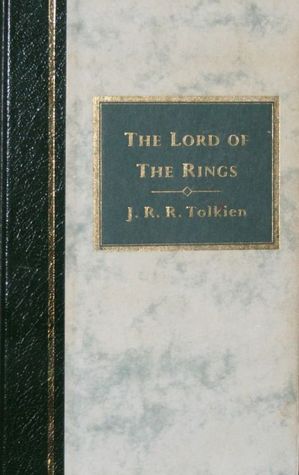
The Hobbit by J R R Tolkien

Many years ago I read Tolkien’s The Lord of the Rings and loved the story, so much so that over the years I’ve re-read the books several times. Somehow I’ve ignored The Hobbit, or There and Back Again, maybe thinking that because it’s a children’s book it was too late for me to appreciate it. So even though I’ve had a copy for years it’s only now that I’ve got round to reading it, spurred on by seeing the film this year. (I read the enhanced version on Kindle.) How wrong I was not to have read it before - The Hobbit is a book that all ages can enjoy.

It’s an adventure story of a quest set in a fantasy world, so beautifully written that it seems completely believable. Bilbo Baggins, a hobbit, is recruited through Gandalf, the wizard, to accompany a party of thirteen dwarves, led by Thorin, on their quest to recover the dwarves’ treasure stolen by Smaug the dragon and regain possession of the Lonely Mountain. Along the way Bilbo grows in confidence and becomes a hero, meeting elves, outwitting trolls, fighting goblins, and above all gaining possession of the ring from Gollum.

The enhanced version has a foreword by Christopher Tolkien, complete with illustrations including manuscript pages and unused drawings, in which he describes how and why his father came to write The Hobbit: he would stand in front of the fire in his study and tell stories to Christopher (then aged between four and five years old) and his brothers. One story, this story, he said, was a long story about a small being with furry feet, which he thought he would call a “Hobbit”. This was in about 1929. The book was eventually published in 1937, written whilst Tolkien was engrossed in writing the myths and legends told in The Silmarillion. He hadn’t intended The Hobbit to be connected to the mythology, but his tale gradually became larger and more heroic as he wrote it.

The Hobbit sold very quickly and people asked for a sequel. At first Tolkien thought that writing more details about Gandalf and the Necromancer (Sauron) would be too dark and that many parents “may be afraid that certain parts of it would be terrifying for bedtime reading.” He also wrote:

Mr Baggins began as a comic tale among conventional and inconsistent Grimm’s fairy-tale dwarves, and got drawn into the edge of it – so that even Sauron the terrible peeped over the edge. And what more can hobbits do? They can be comic, but their comedy is suburban unless it is set against things more elemental. (location 339)

Three days after writing those words he wrote:

I have written the first chapter of a new story about Hobbits – “A long expected party.”

That was the first chapter of The Lord of the Rings. (location 339)

It also includes recently discovered audio recordings of J.R.R. Tolkien reading excerpts from The Hobbit, including the dwarves’ party song, the account of their capture by the three trolls, and Bilbo Baggins’s creepy encounter with Gollum.

The Hobbit is an excellent first book for Carl’s Once Upon a Time VII.

Mount TBR: March Checkpoint

It’s time for the first quarterly check-in post for Mount TBR. Last year I read 25 of my TBR books, so for this year I was determined to read more and rashly stated I was aiming to climb Mt Ararat – that is to read 48 books from my own bookshelves.

I have made a very slow start with just 4 books completed, so not very far up the mountain at all. They are:

  1. The Case of the Curious Bride by Erle Stanley Gardner
  2. The Lacuna by Barbara Kingsolver
  3. Cat Among the Pigeons by Agatha Christie (Poirot)
  4. Small Kindnesses by Fiona Robyn (no review)
The book that has been on Mt TBR the longest is The Lacuna by Barbara Kingsolver. Sadly, although The Lacuna is well written and well researched I felt there was something missing, the personal elements that brought the story to life for me were few and far between; I couldn’t feel involved and just wanted it to end. I persevered because it has had such good reviews and recommendations, but it dragged for me. It’s a long book too!


I wasn’t too impressed with the other books, either, but the stand-out exception was Agatha Christie’s Cat Among the Pigeons,  a Poirot mystery, which I thoroughly enjoyed and it was well worth the wait to read it.

Once upon a Time …

“Once upon a time” – words that conjure up a world of magic and enchantment. Words that promise to bewitch and beguile and whisk you away to a fairytale world. But fairy tales don’t always end “… and they all lived happily ever after.” I remember very well being frightened by the stories in a big illustrated book of fairy tales when I was a child – maybe it was the pictures, or the words, or the combination of the two. Whatever it was, fairy tales are not always nice and comfortable, of the “are you sitting comfortably? then I’ll begin” variety. They can be scary …

It’s time once again for Carl’s Once Upon a Time Challenge VII, which began on Thursday, March 21st and continues until Friday, June 21st.

Once upon a time VII

Carl writes that It’s not really a challenge, more of a reading and viewing event that encompasses four broad categories: Fairy Tale, Folklore, Fantasy and Mythology, including the seemingly countless sub-genres and blending of genres that fall within this spectrum. The entire goal is to read good books, watch good television shows and movies, and most importantly, visit old friends and make new ones.

There are several ways to participate, and I’m choosing Quest the First:Read at least 5 books that fit somewhere within the Once Upon a Time categories. They might all be fantasy, or folklore, or fairy tales, or mythology…or your five books might be a combination from the four genres.

Quest 1

These are the books I’m choosing from, some of which I’ve had for ages and have never got round to reading and some of which are new ones which I’ve added during the last couple of years:

  • The Death of King Arthur – this is a translation of the 13th century French version of the Camelot legend.
  • The Ingoldsby Legends by Richard Harris Barham - a collection of myths, legends, ghost stories and poetry.
  • The Brief History of the Dead by Kevin Brockmeier – about a place between heaven and earth where everyone ends up after they die.
  • The Book of Lost Things by John Connolly - Twelve-year old David takes refuge in myths and fairytales.
  • Daughters of Fire by Barbara Erskine – a time slip novel focussed on the legends surrounding Cartimandua, a Celtic queen.
  • Helen of Troy by Margaret George – the myth narrated from Helen’s point of view.
  • Shadowland by C M Gray -  historical fantasy set in Dark Ages Britain.
  • The Owl Killers by Karen Maitland – a tale of witchcraft and pagan superstition.
  • Dreamwalker (The Ballad of Sit Benfro) by James Oswald – fantasy fiction – Welsh mythology and folklore.
  • The first four Merrily Watkins books by Phil Rickman -  The Wine of Angels, Midwinter of the Spirit, A Crown of Lights, and The Cure of Souls -  paranormal crime thrillers with supernatural and spiritual causes.
  • The Last Enchantment by Mary Stewart – a tale of Merlin and King Arthur and the third book in the Merlin trilogy. I read The Crystal Cave and The Hollow Hills years ago and don’t think I’ve ever read this one.
  • The Children of Hurin by J R R Tolkien – Tales of Middle-earth from times before The Lord of the Rings, set in the country that lay beyond the Grey Havens in the West.
  • The Hobbit by J R R  Tolkien – even though I’ve read The Lord of the Rings trilogy several times I’ve not read this!
  • A Connecticut Yankee in King Arthur’s Court by Mark Twain – fantasy fiction in which a Yankee engineer is accidentally transported back in time to the court of King Arthur.

I know I’ve got more but this is more than enough to start with.  It’s a mixed bunch and as I like making lists and don’t like making reading plans, I haven’t decided which ones to read over the next three months. Right now, I want to start them all!

Turn of the Century Salon: March

Turn of the Century SalonThe Turn of the Century Salon, is a monthly literary event where you can share recent posts related to literature or authors from the 1880s-1930s. One of Katherine’s suggestions for this month’s post is to find a work of art or music within the same time-period that reflect the book and share it.

After reading Siegfried Sassoon’s Memoirs of a Fox-Hunting Man I decided to read more of his works, including his poetry and bought The War Poems of Siegfried SassonWorld War One British Poets: Brooke, Owen, Sassoon, Rosenberg and Others, edited by Candace Ward. I’ve also borrowed Sassoon’s Memoirs of an Infantry Officer and Siegfried Sassoon: a Biography by Max Egremont and am slowly reading through these.

I’m familiar with some of the World War One war poets, such as Rupert Brooke (The Soldier – ‘If I should die, think only this of me: That there’s some corner of a foreign field That is forever England), Wilfred Owen (Dulce et Decorum Est), and Thomas Hardy (Channel Firing) and so on, but I hadn’t read any of Sassoon’s poems.

They are satires condemning the war. Sassoon described his poems such as The One-Legged Man as “satirical drawings”, which he intended to “disturb complacency”. Here is his poem In the Pink

So Davies wrote: ‘ This leaves me in the pink. ‘
Then scrawled his name: ‘ Your loving sweetheart Willie ‘
With crosses for a hug. He’d had a drink
Of rum and tea; and, though the barn was chilly,
For once his blood ram warm; he had pay to spend,
Winter was passing; soon the year would mend.

He couldn’t sleep that night. Stiff in the dark
He groaned and thought of Sundays at the farm,
When he’d go out as cheerful as a lark
In his best suit to wander arm-in-arm
With brown-eyed Gwen, and whisper in her ear
The simple, silly things she liked to hear.

And then he thought: to-morrow night we trudge
Up to the trenches, and my boots are rotten.
Five miles of stodgy clay and freezing sludge,
And everything but wretchedness forgotten.
To-night he’s in the pink; but soon he’ll die.
And still the war goes on; he don’t know why.

Looking for more information about this poem I found this description in Siegfried Sassoon: a Study of the War Poetry by Patrick Campbell (page 94):

“The first of my ‘outspoken’ war poems.  I wrote it one cold morning at Morlancourt, sitting by the fire in the Quartermaster’s billet, while our Machine-Gun Officer shivered in his blankets on the floor.  He was suffering from alcoholic poisoning, and cold feet, and shortly afterwards departed for England, never to return.  Needless to say, the verses do not refer to him, but to some typical Welshman who probably got killed on the Somme in July, after months and months of a dog’s life and no leave.  The Westminster refused the poem, as they thought it might prejudice recruiting!!”

Reading Sassoon’s war poems brings home the horrors of war, the deaths, the devastating injuries and the appalling indifference of the war leaders and the lack of understanding of the people back home.

Similarly some works of art were considered controversial and not suitable for public viewing. Such a painting is Paths of Glory by Christopher Nevinson showing the corpses of two dead British soldiers lying face down in the mud among barbed wire behind the Western Front. Their helmets and rifles lie in the mud next to them.

Paths of Glory by Christopher Nevinson 1917 Oil on Canvas Collection: © Imperial War Museum

This painting is held in the Imperial War Museum website. Its description is:

“The title is a quote from ‘Elegy Written In A Country Church-Yard’ by Thomas Gray. ‘The boast of heraldry, the pomp of pow’r, And all that beauty, all that wealth e’er gave, Awaits alike th’inevitable hour. The paths of glory lead but to the grave.‘ Whereas the poet reflects on bodies dead and buried in a church-yard, the so-called ‘Paths of Glory‘ have led these soldiers to death in a wasteland.

Paths of Glory‘ was famously censored by the official censor of paintings and drawings in France, Lieutenant – Colonel A N Lee. His concern presumably being the representation of the rotting and bloated British corpses at this stage in the war. The decision was confirmed three months before the opening of his exhibition at the Leicester Galleries in 1918 but Nevinson still included the painting with a brown paper strip across the canvas, blatantly inscribed with the word ‘censored’. As a result, Nevinson was reprimanded for exhibiting a censored image and for the unauthorised use of the word ‘censored’ in a public space. Predictably, the stunt created the publicity Nevinson desired. The painting was purchased by the Museum during the course of the exhibition.”

This was the ‘war to end war’! The pity is that it didn’t.

Cat Among the Pigeons by Agatha Christie

I’ve read about half of Agatha Christie’s books ranging from her first books in the 1920s to the later ones in the 1970s and the quality of her writing does change, with some of the later books being rather loosely plotted and meandering. Cat Among the Pigeons is one of her later books, first published in 1959 and it’s one of the best of these later novels.

It’s set mainly in an exclusive and expensive girls’ school, Meadowbank, in England, said to be based on her daughter Rosalind’s school. The summer term has just started and there are some new members of staff as well as some new pupils, including Princess Shaista from Ramat, a small and rich Arab state in the Middle East, which has just suffered a revolution. Her fiancé, Prince Ali Yusuf the Hereditary Sheik, has been murdered and his family jewels have disappeared.

The success of the school is down to Miss Bulstrode, the headmistress and founder of Meadowbank, but she is thinking of retiring. Miss Chadwick, who had helped Miss Bulstrode to found Meadowbank would like to be her successor, but Miss Bulstrode has other ideas. Will it be Miss Vansittart, who is her second in command, or one of the other teachers who would be able to develop the school in line with modern educational thinking? Miss Bulstrode is not sure. She is busy greeting one of the parents when her attention is distracted by one of the mothers approaching clearly in a state of advanced intoxication, so she misses something else that could very well be important. And although she feels uneasy:

There was nothing to tell her that within a few weeks Meadowbank would be plunged into a sea of trouble; that disorder, confusion and murder would reign there, that already certain events had been set in motion … (page 27)

The new staff members are not all fitting in very well. There is Miss Springer, the new Games Mistress, who is not popular with the girls and asks too many personal questions, Mlle Angele Blanche, the new French teacher, whose teaching leaves much to be desired, Ann Shapland, Miss Bulstrode’s new and efficient secretary, and last but not least Adam Goodman, the handsome young new gardener, who is good at his job and has other talents too.

As well as Princess Shaista, Jennifer Sutcliffe is new to the school this term. She’s an uncomplicated character who lives mainly for tennis. She makes friends with Julia Upjohn, who is a much more thoughtful, observant character. So when Miss Springer is found shot dead in the new Sports Pavilion, followed not long after by the murder of Miss Vansittart, it’s Julia who decides to contact Hercules Poirot.

There are several possible motives and suspects and Agatha Christie combines the murder stories with a thriller element by introducing Colonel Pikeaway, who it is hinted is in charge of British Intelligence – ‘We know all about things here. That’s what we’re for.‘ (page 46) and the mysterious Mr Robinson, who is most decidedly not an Englishman although his voice was English with no trace of an accent.

Poirot, of course, although arriving very late in the investigations, works it all out and explains what had happened. But Julia also has worked it out and without giving too much away I’m quoting this passage where she is writing an essay on the contrasting attitudes of Macbeth and Lady Macbeth to murder:

Macbeth, Julia had written, liked the idea of murder and had been thinking of it a lot, but he needed a push to get him started. Once he got started he enjoyed murdering people and had no more qualms or fears. Lady Macbeth was just greedy and ambitious. She thought she didn’t mind what she did to get what she wanted. But once she’d done it, she found she didn’t like it after all. (page 239)

There in a nutshell are the motives for the murder – a ruthless disregard of the value of life and greed and ambition.