Paula at The Book Jotter is hosting the sixth Reading Wales celebration (aka Dewithon 24), a month-long event beginning on Saint David’s Day, during which book lovers from all parts of the world are encouraged to read, discuss and review literature from and about Wales. I haven’t taken part before but this year I hope I can read at least one book.
Here are a few books I have on my bookshelves to choose from:
How Green was My Valley by Richard Llewellyn. A story of life in a mining community in rural South Wales as Huw Morgan is preparing to leave the valley where he had grown up. He tells of life before the First World War.
Richard Llewellyn Richard Dafydd Vivian Llewellyn Lloyd, known by his pen name Richard Llewellyn, was born in Hendon, London of Welsh parents. Only after his death was it discovered that Llewellyn’s claim that he was born in St Davids, West Wales, was false.
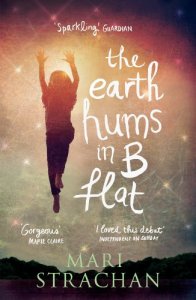
The Earth Hums in B Flat by Mari Strachan. Gwenni Morgan is not like any other girl in this small Welsh town. Inquisitive, bookish and full of spirit, she can fly in her sleep and loves playing detective. So when a neighbour mysteriously vanishes, and no one seems to be asking the right questions, Gwenni decides to conduct her own investigation.
Mari Strachan was born into a Welsh family in Harlech, on the north-west coast of Wales, and was brought up there with Welsh as her first language.
Completely Unexpected Tales by Roald Dahl. Described on the back cover as a collection of macabre tales of vengeance, surprise and dark delights. I used to enjoy these tales in the TV series, Tales of the Unexpected, years ago.
Roald Dahl was born n Llandaff, Glamorgan. His parents were Norwegian. I bought this at The Roald Dahl Museum and Story Centre in the village of Great Missenden, Buckinghamshire where Dahl lived until his death in 1990.
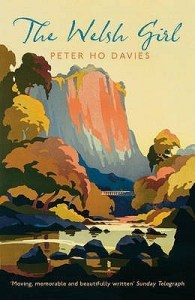
The Welsh Girl by Peter Ho Davies. In 1944, a German Jewish refugee is sent to Wales to interview Rudolf Hess; in Snowdonia, a seventeen-year-old girl, the daughter of a fiercely nationalistic shepherd, dreams of the bright lights of an English city; and in a nearby POW camp, a German soldier struggles to reconcile his surrender with his sense of honour. As their lives intersect, all three will come to question where they belong and where their loyalties lie.
Peter Ho Davies was born and raised in Coventry to Welsh and Chinese parents, he now makes his home in the US.
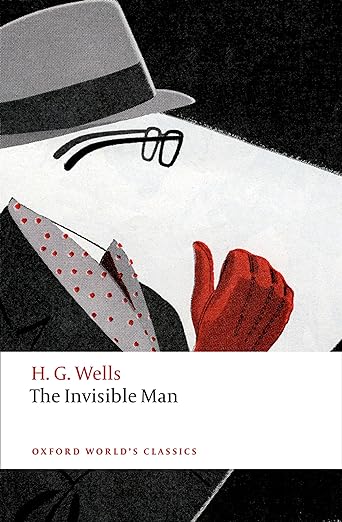
which for me is The Invisible Man by H G Wells. The rules of the Spin are that this is the book for me to read by 3rd March 2024
Synopsis from Amazon
‘The man’s become inhuman … He has cut himself off from his kind. His blood be upon his own head.’
One night in the depths of winter, a bizarre and sinister stranger wrapped in bandages and eccentric clothing arrives in a remote English village. His peculiar, secretive activities in the room he rents spook the locals. Speculation about his identity becomes horror and disbelief when the villagers discover that, beneath his disguise, he is invisible.
Griffin, as the man is called, is an embittered scientist who is determined to exploit his extraordinary gifts, developed in the course of brutal self-experimentation, in order to conduct a Reign of Terror on the sleepy inhabitants of England. As the police close in on him, he becomes ever more desperate and violent.
In this pioneering novella, subtitled ‘A Grotesque Romance’, Wells combines comedy, both farcical and satirical, and tragedy – to superbly unsettling effect. Since its publication in 1897, The Invisible Man has haunted not only popular culture (in particular cinema) but also the greatest and most experimental novels of the twentieth century.
I was hoping I’d get one of the shorter books on my list – this one is just that at 192 pages. I’m looking forward to reading it.
Did you take part in the Classics Spin? What will you be reading?
Happy New Year to you all! I’m wishing you all health and happiness for 2024 and lots of good books to read.
With thanks to Annabookbel for the reminder about this annual meme…Using only books you have read this year answer these prompts. Try not to repeat a book title. (Links in the titles will take you to my reviews where they exist)
2023 has been a good time for reading books, but not a good time as far as writing reviews goes and I am way behind. I’ll probably never catch up.
These are 10 of the 21 books I rated 5 star reads this year. I’ve listed them in a-z author order, with links to my reviews where they exist.
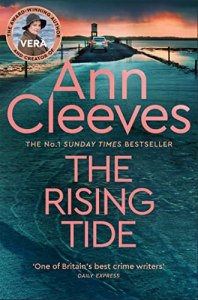
The Rising Tide by Ann Cleeves – this is the 10th Vera Stanhope mystery novel. I love the Vera books and this one is no exception. Ann Cleeves is a superb storyteller. Her books are deceptively easy to read, moving swiftly along as the tension rises. They are layered, cleverly plotted and above all convincing. It’s set on the Holy Island of Lindisfarne, a tidal island just off the coast of Northumberland, only accessible across a causeway when the tide is out.
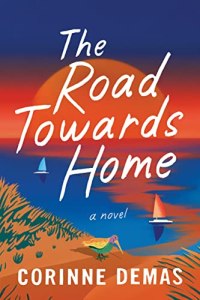
The Road Towards Home by Corinne Demas – I thoroughly enjoyed this book, a complete and welcome change from crime and hisrorical fiction. It’s about the friendship between Cassandra and Noah, two retired people who had first met in their youth. They were reacquainted when they moved to Clarion Court an ‘an independent living community’. Noah invites Cassandra to rough it with him at his Cape Cod cottage, and their relationship unexpectedly blossoms after several ups and downs.
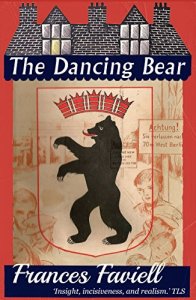
The Dancing Bear by Francis Faviell – a moving memoir of the Occupation. Set in Berlin it covers the years from autumn 1946 to autumn 1949 and is mainly about her friendship with the Altmann family. Frances is horrified by the conditions she found. There were deaths from hunger and cold as the winter approached and queues for bread, milk, cigarettes, cinemas, buses and trams. I was fascinated by it all – the people, their situations, and their morale and attitudes as well as the condition of Berlin in the aftermath of World War Two. The realities of living under occupation are clearly shown, as well as the will to survive despite all the devastation and deprivation.
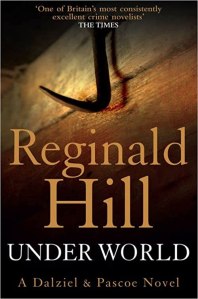
Underworld by Reginald Hill – the 10th Dalziel and Pascoe novel, set in the small mining town of Burrthorpe (a fictional town) in Yorkshire. The majority of the book is about the miners, their families, their hatred of the bosses, and their distrust and dislike of the police. There are two mysteries facing Dalziel and Pascoe. One is current and the other is a case that had appeared to have been resolved several years earlier, when a young girl disappeared. Dalziel has just a minor role as Pascoe leads the investigation. And it’s left to Dalziel to bring a touch of humour to the book. His down to earth approach to the miners gets more results than Pascoe’s middle class attempts to understand them.
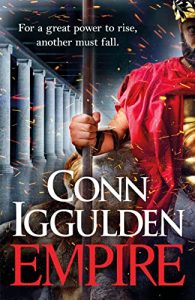
Empire by Conn Iggulden – this is the first book in Conn Iggulden’s Golden Age series set in the 5th century BCE. I thoroughly enjoyed it which surprised me as generally speaking I’m not keen on reading battle scenes and the book starts and ends with battles. But I had no problem with following the action of the battles between the Greeks and the Persians, and was able to visualise what was going on without any difficulty.
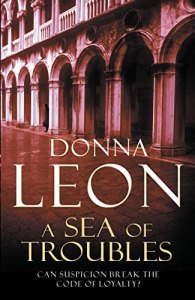
A Sea of Troubles by Donna Leon – the 10th Commissario Guido Brunetti novel. Brunetti is one of my favourite detectives. He is happily married with two children. He doesn’t smoke or drink to excess and often goes home for lunch to his beautiful wife Paolo, who is a wonderful cook. In this book he investigates the deaths of two clam fishermen, father and son, off the island of Pellestrina, south of the Lido on the Venetian lagoon, when their boat had suddenly exploded. He found himself in a web of political intrigue, corruption and secrets. From a slow start the ending is dramatic and action packed with Brunetti and Elletra, his boss’s secretary, in danger of their lives.
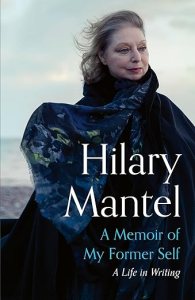
A Memoir of My Former Self by Hilary Mantel – a selection of articles and essays including newspaper and periodical articles, film reviews, and her Reith lectures. She wrote about episodes from throughout her life and about a huge variety of topics, including her thoughts on her own historical fiction, explaining how and why she wrote the Wolf Hall trilogy, her love for Jane Austen’s novels, her thoughts on nationalism, and on identity – being European and ‘English’ that I found particularly fascinating and thought-provoking.
I read it totally out of order and want to go back and can read it all again before writing any more about it. If you like Mantel’s work it’s a ‘must read’.
Excellent Women by Barbara Pym – set just after the end of the Second World War, about the everyday life of Mildred Lathbury, an unmarried woman – in other words a spinster – in her early 30s. The daughter of a clergyman she is one of those ‘excellent women’ who could be relied upon to help out at Church jumble sales, garden fêtes, to make tea when required or to make up numbers at social gatherings. Pym is such a keen observer of human nature, giving the little details that bring the characters to life. I found them all totally believable, each with their own eccentricities. She writes so simply but with such depth. It’s a slow-paced book but all the better because of that.
On the Beach by Nevil Shute – I think this is a terrifying and incredibly sad book, and yet it all seems low key. People go about their everyday lives but set against the background that the world is about to end. It was first published in 1957 and is set sometime in the early 1960s about a group of people living in Melbourne and on the USS submarine, Scorpion, as they await the arrival of deadly radiation spreading towards them from the Northern Hemisphere, following a nuclear war the previous year.
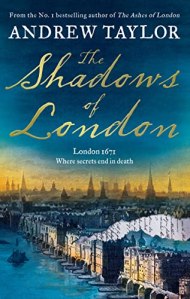
The Shadows of London by Andrew Taylor – the 6th book in his James Marwood and Cat Lovett Restoration series. I’ve read all of the previous books, set in 17th century England, during the reign of Charles II, and thoroughly enjoyed each one. When a man’s brutally disfigured body is discovered in the ruins of an ancient almshouse it is obvious he has been murdered, and Whitehall secretary James Marwood is ordered to investigate. One of the things that I really enjoyed in this book is the picture it paints of John Evelyn, the writer and diarist, bibliophile and horticulturalist. He was a contemporary of Samuel Pepys. His diary covers the years from 1640 to 1706 when he died. And now I want to find out more about him.
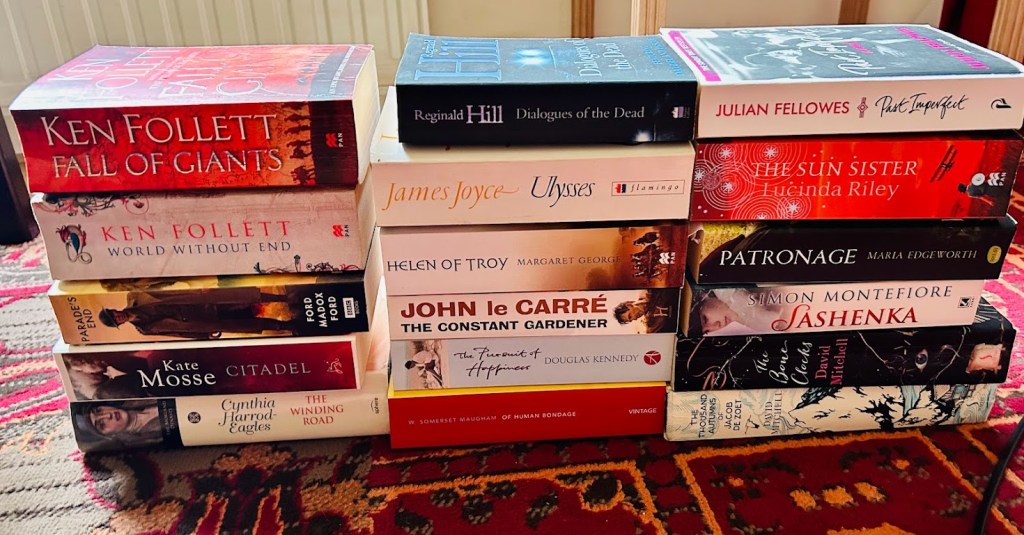
I’ve got a lot of long books over 500 pages long and I keep putting off reading them because of their length, but they do take up a lot of space on the bookshelves. The ones shown above are just some of them and I’m hoping to start reading at least a few of them in the months to come.
Maybe I’ll start with one of the two books by Ken Follett:
Fall of Giants is the first book in his Century Trilogy, following five families through the world-shaking dramas of the First World War, the Russian Revolution, and the struggle for votes for women.
Or
World Without End, the second Kingsbridge book, set two centuries after the townspeople finished building the Gothic cathedral that was at the heart of The Pillars of the Earth (my review).
Or it could be one of the others, as my fancy takes me.
If you’ve read any of these books I’d love to know what you think about them.
The one at the bottom of the middle pile is Of Human Bondage by W Somerset Maugham.
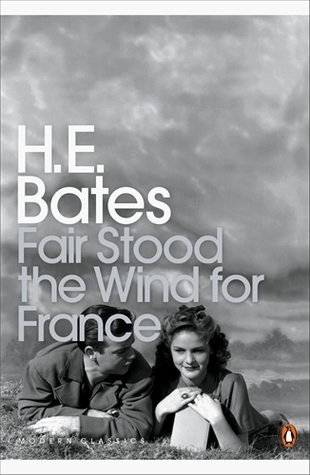
which for me is Fair Stood the Wind for France by H E Bates. The rules of the Spin are that this is the book for me to read by Sunday the 3rd December2023.
Synopsis from Amazon
When John Franklin brings his plane down into Occupied France at the height of the Second World war, there are two things in his mind – the safety of his crew and his own badly injured arm. It is a stroke of unbelievable luck when the family of a French farmer risk their lives to offer the airmen protection. During the hot summer weeks that follow, the English officer and the daughter of the house are drawn inexorably to each other.
I’m looking forward to reading it.
Did you take part in the Classics Spin? What will you be reading?





 BooksPlease