Over the years I’ve done several versions of this tag. This one was created by Shelleyrae of Book’d Out. Links from each title will take you to my book review.
Complete the prompts using titles from the books you have read in 2025 to complete the sentenceto describe your life in the past year.
I saw the Do I have that Book? challenge on Janette’s blog, Wicked Witch, who saw it on Alli the Book Giraffe. It was originally created way back in August 2018 by Tabby, a booktuber.
I liked the idea and thought I’d have a go too. Here are my answers:
1. Do you have a book with deckled edges?
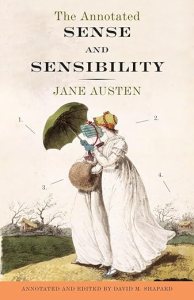
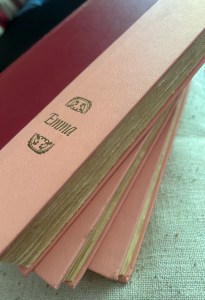
Pride and Prejudice, Emma and Sense and Sensibility by Jane Austen, a three book set published by Nelson Doubleday has deckled edges. A note with the books explained that deckled edges are formed at an early stage as pulp is allowed to flow against rubber deckle straps between the frame and the edges of a paper makers mould.
2. Do you have a book with 3 or more people on the cover?
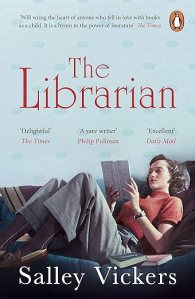
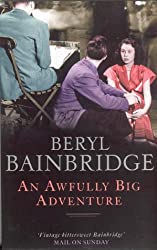
This is set in 1950, as a Liverpool repertory theatre company is rehearsing its Christmas production of Peter Pan. The story centres around Stella, a teenager and an aspiring actress who has been taken on as the assistant stage manager.
It’s semi-autobiographical based on Beryl Bainbridge’s own experience as an assistant stage manager in a Liverpool theatre. On the face of it this is a straight forward story of the theatre company but underneath it’s packed with emotion, pathos and drama. And it’s firmly grounded in a grim post-war 1950s England, food rationing still in operation and bombed buildings still in ruins overgrown with weeds. It really is an awfully good book.
3. Do you have a book based on another fictional story?
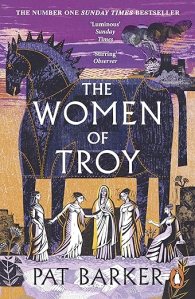
I loved the first two books, The Silence of the Girls and The Women of Troy both of which are based on Homer’s Iliad and Virgil’s Aeneid, so I was very keen to read The Voyage Home. I wasn’t disappointed but it is slightly different in that this third book is loosely based on the first part of Aeschylus’s Oresteia.
4. Do you have a book with a title 10 letters long?
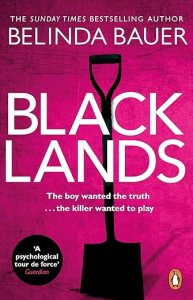
It’s told mainly from Stephen Lamb’s perspective. Stephen is twelve years old. Nineteen years earlier Billy, Stephen’s uncle then aged eleven had disappeared. It was assumed that he had fallen victim to the notorious serial killer Arnold Avery, but his body had never been found. Stephen is determined to find where Arnold had buried his body and writes to him in prison.
5. Do you have a book with a title that starts and ends with the same letter?
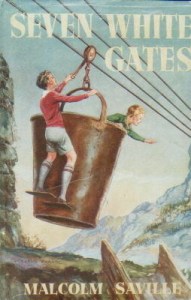
Seven White Gates by Malcolm Saville, the second in his Lone Pine series, first published in 1944, an exciting adventure story. The Lone Pine books are about a group of children who formed a secret society in wartime Shropshire. I particularly like the setting of Seven White Gates, in Shropshire not far from the border with Wales, an area rich in folklore and legend.
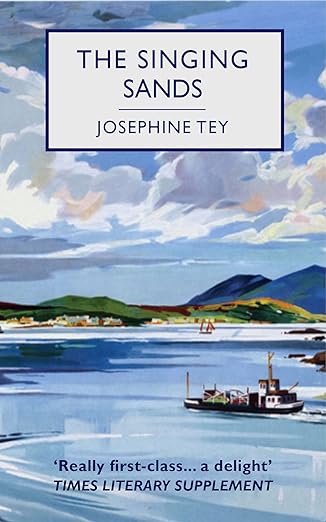
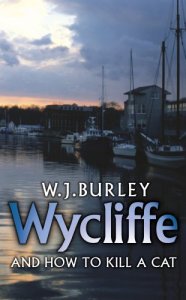
Set in the late 1960s in Cornwall, Superintendent Wycliffe, despite being on holiday can’t help getting involved when a young woman is found murdered in her seedy hotel bedroom. She’d been strangled and her face had been savagely smashed in. A thousand pounds was still in a drawer, hidden beneath her clothes, so the motive wasn’t theft.
I wondered about the title as there are no details in it about how to kill a cat!
7. Do you have a book written by an author using a pen name?
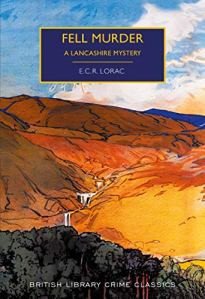
Fell Murder by E C R Lorac E C R Lorac was a pen name of Edith Caroline Rivett (1894-1958) who was a prolific writer of crime fiction from the 1930s to the 1950s. It’s the 25th book featuring Chief Inspector Robert Macdonald, set in Lunesdale in Lancashire towards the end of the Second World War. The mystery begins with the discovery of the body of old Robert Garth – found dead–’dead as mutton‘–in the trampled mud of an ancient outhouse.
8. Do you have a book with a character’s name in the title?
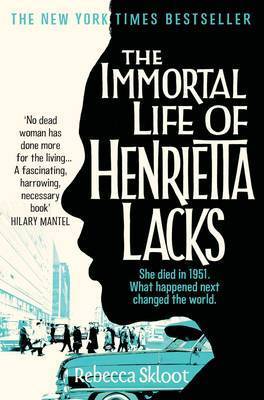
The Immortal Life of Henrietta Lacks by Rebecca Skloot, an outstanding book! It’s fascinating, but harrowing to read in parts, from all the details of Henrietta’s life, how she was treated for cervical cancer in 1951, when she was just 30, to her death nine months later. Cancer treatment in 1951 with radium was brutal, but what made it worse was that Henrietta was a black woman, living in near-poverty in Baltimore. It is a remarkable and personal record of the Lacks family based on an impressive amount of research using legal documents and medical records, personal journals and interviews with Henrietta’s family and friends, and lawyers, ethicists, scientists and journalists.
9. Do you have a book with 2 maps in it?
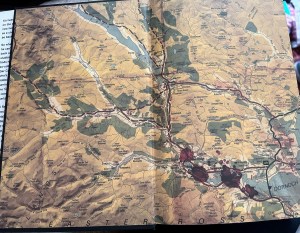
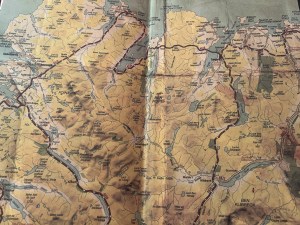
Standing in Another Man’s Grave by Ian Rankin. Both the endpapers in my hardback copy of the book are copies of OS maps of the area, showing the route along the A9 in Scotland that Rebus took whilst investing a cold case as a retired police officer.
10. Do you have a book that was turned into a TV show?
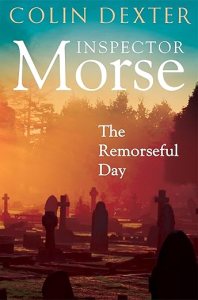
The Remorseful Day by Colin Dexter, the last book in his Inspector Morse series. Chief Inspector Morse is one of my favourite fictional detectives. I first came across him watching the ITV series Inspector Morse. I enjoyed both the books and the TV adaptations.
11. Do you have a book written by someone who is originally famous for something else? (celebrity/athlete/politician/tv personality…)
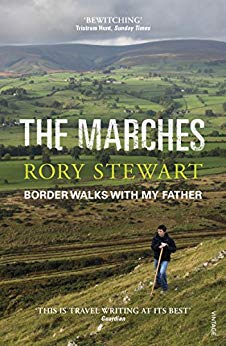
The Marches Border Walks with My Father by Rory Stewart. He is a British academic, broadcaster, writer, and former diplomat and politician. He has taught at Harvard University and at Yale University.
But the reason I read his book is because of the subject – walking in the borderlands between England and Scotland, in the place where I live. And it’s not just about walking – he also muses on history, memory and landscape, all topics that interest me immensely.
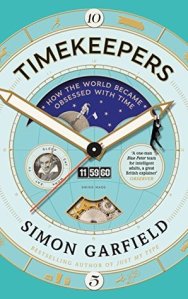
Timekeepers is a book about our obsession with time and our desire to measure it, control it, sell it, film it, perform it, immortalise it and make it meaningful. It has two simple intentions: to tell some illuminating stories, and to ask whether we have all gone completely nuts.
The story that interested me most was Movie Time, with an account of how the silent film, Safety Last!was made in 1923.
13. Do you have a poetry book?
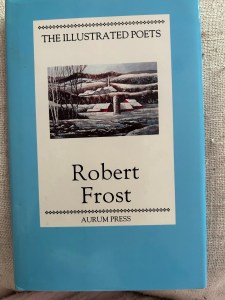
I have a few. One of my favourites is Robert Frost (The Illustrated Poets series) – a slim little book with a selection of Frost’s verse illustrated by American, English and French painters of the nineteenth and twentieth centuries. Frost’s poems are written in deceptively simple language but they convey great depth of meaning. They are compact and powerful. And the illustrations are beautiful.
The beauty of poetry is the way that so much meaning is condensed into such few words.
14. Do you have a book with an award stamp on it?
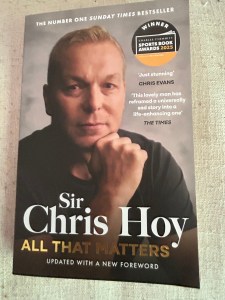
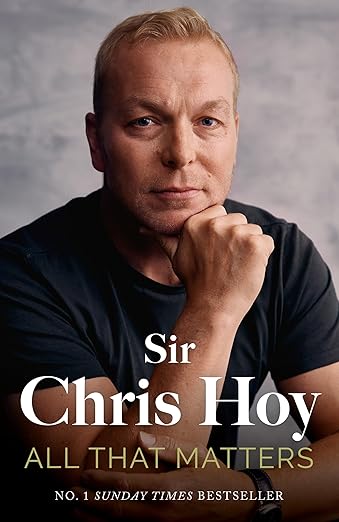
All that Matters by Sir Chris Hoy, the Winner of the Charles Tyrwhitt Sports Book Award Autobiography of the Year 2025. Chris Hoy is a former track cyclist and racing driver from Scotland who represented Great Britain at the Olympic and World Championships and Scotland at the Commonwealth Games. Hoy is an 11-time world champion and a six-time Olympic champion.
In 2023 he was diagnosed with Stage 4 cancer. Chris shares the next phase of his extraordinary life with exceptional bravery. He looks over the challenges he has faced thus far, and the ways he has taken them on. With his wife Sarra and their young children by his side, he shares how he has used these experiences to find ways to focus on the moments that matter, showing us how to do the same.
I haven’t read it yet.
15. Do you have a book written by an author with the same initials as you?
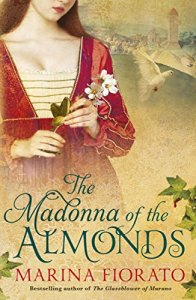
A love story set in Italy in the 16th century, about a young widow, Simonetta di Saronno, struggling to save her home, who meets the artist Bernadino, a protege of Leonardo da Vinci. Bernardino was so captivated by Simonetta’s beauty that her face is the face of every female Saint, every Magdalene and every Madonna that he painted. Simonetta at first resists Bernardino’s advances but of course eventually falls in love with him, causing scandal in the local community.
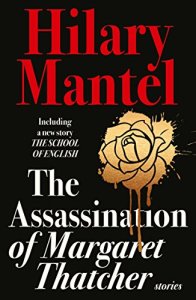
I enjoyed this collection of stories, which are brooding, somewhat melancholic, dark, disturbing and full of sharp and penetrating observations – brilliant! The title story is the last one in the book and is the only new story, the others having first appeared in other publications. Waiting for the plumber to arrive, a woman lets a man into her flat, only to find out he has a gun and wants to shoot Margaret Thatcher from the flat window, as she leaves the hospital behind the flats.
17. Do you have a book that is between 500-510 pages long?
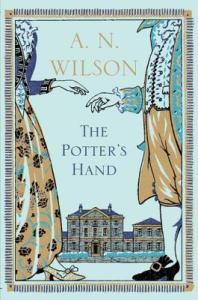
Beginning in 1768 this roughly follows the fortunes of the Wedgwood family until 1805, 10 years after the death of Josiah Wedgwood, an English potter and the founder of the Wedgwood company. It’s the story of a remarkable family, their lives, loves, work, illnesses, depressions, addictions and deaths. I found it fascinating throughout, whether it was set in America during the fight for independence, or in England in Wedgwood’s factories, or in Josiah’s grand new house Etruria Hall, or travelling through England on the new canals.
18. Do you have a book that was turned into a movie?
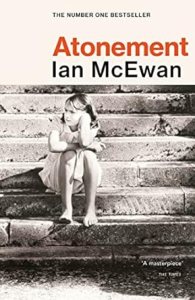
Atonement by Ian McEwan, one of my favourite novels was made into a 2007 romantic war film starring James McAvoy, Keira Knightley, Saoirse Ronan, Romola Garai, and Vanessa Redgrave. The film is mostly faithful to the book, with minor alterations, except for the ending. I prefer the book’s ending. I think the book is superior overall to the film. It was shortlisted for the Booker Prize in 2001. As well as being a love story and a war novel it’s also a mystery and a reflection on society and writing and writers.
19. Do you have a graphic novel?
No, although I have looked at them in the library – and decided not to borrow one.
20. Do you have a book written by 2 or more authors?
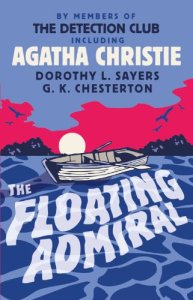
The Floating Admiral by Agatha Christie, Dorothy L Sayers and ten other crime writers from the Detection Club, with a prologue by G K Chesterton, first published in 1931. In a literary game of consequences, each author wrote one chapter, leaving G.K. Chesterton to write a typically paradoxical prologue and Anthony Berkeley to tie up all the loose ends. In addition, each of the authors provided their own solution in a sealed envelope, all of which appeared at the end of the book, with Agatha Christie’s ingenious conclusion acknowledged at the time to be ‘enough to make the book worth buying on its own’. I haven’t read it yet.
I have 19 books out of the 20 prompts. It took me several days (on and off) to compile this post, but I enjoyed doing it immensely, reminding me of books I’ve read years ago and some more recently – and some I haven’t read yet!
How many of these 20 book categories do you have on your bookshelves?
If you fancy having a go at the challenge, here’s a list of the 20 prompts
1. Do you have a book with deckled edges? 2. DO you have a book with 3 or more people on the cover? 3. Do you have a book based on another fictional story? 4. Do you have a book with a title 10 letters long? 5. Do you have a book with a title that starts and ends with the same letter? 6. Do you have a Mass Market Paperback book? 7. Do you have a book written by an author using a pen name? 8. Do you have a book with a character’s name in the title? 9. Do you have a book with 2 maps in it? 10. Do you have a book that was turned into a TV show? 11. Do you have a book written by someone who is originally famous for something else? (celebrity/athlete/politician/tv personality…) 12. Do you have a book with a clock on the cover? 13. Do you have a poetry book? 14. Do you have a book with an award stamp on it? 15. Do you have a book written by an author with the same initials as you? 16. Do you have a book of short stories? 17. Do you have a book that is between 500-510 pages long? 18. Do you have a book that was turned into a movie? 19. Do you have a graphic novel? 20. Do you have a book written by 2 or more authors?
Jo who used to blog The Book Jotter is not running Six in Six again this year. The idea is to summarise the first six months of reading, sorting the books into six categories – you can choose from the ones Jo suggested or come up with your own. Or if you want to do a shorter version, then just post something about six books you have read in the first six months of 2025.
Although Jo is no longer blogging I think it’s a good way to look back over the last six months’ reading and so I thought I’d do it again this year.
As I’ve been reading less than usual this year (33 books in the first six months) I’ve had to use some of the books in more than one category. And as I’ve been reviewing less I haven’t written posts about all the books. The links take you to my posts on the books, and some are just short posts, not reviews. Books I haven’t reviewed are linked to Amazon.
Top Ten Tuesday is a weekly meme created by The Broke and the Bookish and now hosted by Jana at That Artsy Reader Girl. For the rules see her blog.
This week’s topic is Bookish Goals for 2025 (How many books do you want to read this year? Are you hoping to read outside your comfort zone? Are there books you meant to read last year but never got to? Are there new-to-you authors you’re hoping to read?)
Read 60 or more books. I used to read 90 to 100 books a year, but the last few years my reading rate has dropped a lot, so I’m being more realistic and not making this a target. It all depends on what else is going on in my life and the length of the books I read.
Read the four books on my NetGalley shelf.
Read more of the physical books on my bookshelves. My eyesight is not as good as it was, which means that I’m struggling with the font size in some of these books.
Be more realistic about whether I will actually read these books and recycle those I know I won’t read. This is difficult because in the past when I have recycled books I find I often regret the fact that I did.
Be more careful when considering whether to accept books for review.
Write something about each book I read, even if it’s just a short paragraph.
Read more nonfiction.
I enjoy making lists of books to fit into a challenge, but I need to resist the temptation to join too many reading challenges. There’s a limit to how many books one can read in a lifetime.
I like to read what I like and when I like without any pressure to read to a deadline.
Enjoy the books I’m reading and abandon any that I’m not enjoying.
Top 5 Tuesday was created by Shanah at Bionic Book Worm, and it is now being hosted by Meeghan at Meeghan Reads. For details of all of the latest prompts for January to March, see Meeghan’s post here.
The topic this week is Top 5 anticipated reads for Q1 2025. It’s time to talk about all the shiny new books coming out in January, February and March in 2025. What are the books you can’t wait to hold in your hands the most?
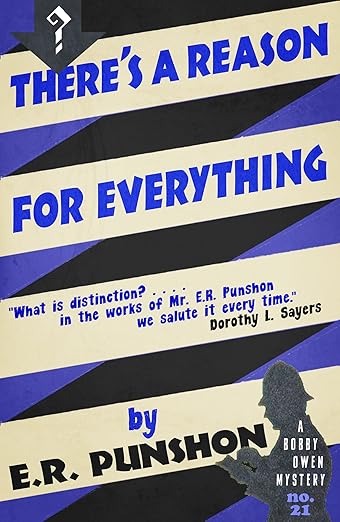
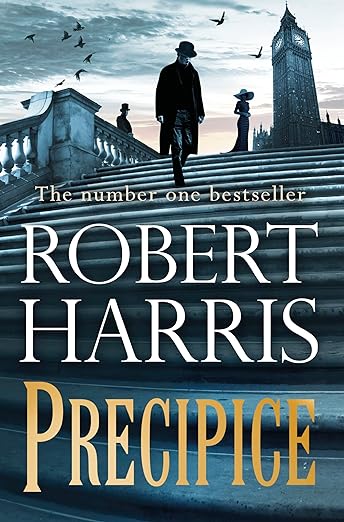
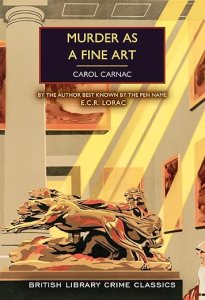
When a civil servant at the newly formed Ministry of Fine Arts is found crushed beneath a monstrous marble bust after dark, it appears to be the third instance in a string of fatal accidents at the department. Already disturbed by rumours of forgeries and irregularities in the Ministry’s dealings, Minister Humphry David is soon faced with the possibility that among his colleagues is a murderer – though how the bust could have been made an instrument of death is a masterstroke of criminal devilment. Taking charge of the case, Inspector Julian Rivers of Scotland Yard enters a caustic world of fine art and civil service grievances to unveil a killer hiding in plain sight.
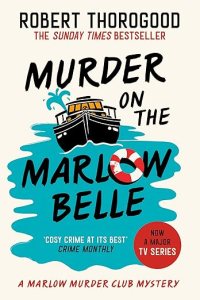
Murder on the Marlow Belle (The Marlow Murder Club Mysteries, Book 4) by Robert Thorogood Publication date 16 January 2025
Verity Beresford is worried about her husband. Oliver didn’t come home last night so of course Verity goes straight to Judith Potts, Marlow’s resident amateur sleuth, for help. Oliver, founder of the Marlow Amateur Dramatic Society, had hired The Marlow Belle, a private pleasure cruiser, for an exclusive party with the MADS committee but no one remembers seeing him disembark. And then Oliver’s body washes up on the Thames with two bullet holes in him – it’s time for the Marlow Murder Club to leap into action.
Oliver was a rather complicated chap and he wasn’t short of enemies. Judith, Suzie, and Becks are convinced they’ll crack the case in no time. But things are not as they seem in the Marlow Amateur Dramatic Society, and the gang will need to keep their wits about them, otherwise a killer may sail away scot-free …
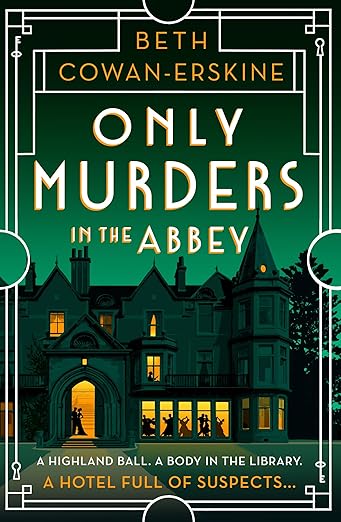
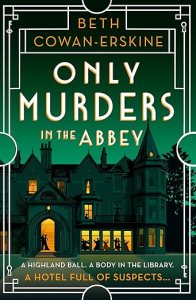
Loch Down Abbey is full of guests for a Highland Ball. Including several uninvited members of the Inverkillen clan, the Abbey’s former residents. Housekeeper Mrs MacBain thinks her biggest challenge will be finding suitable rooms for everyone and keeping the peace at cocktail hour.
Until the morning after the ball, when one of the guests is discovered inside the Abbey’s library – as dead as a doornail.
Who would have had motive to want them dead? And how did they manage to commit their crime and escape while keeping the door locked from the inside? With an Abbey full of suspects and secrets, it is down to Mrs MacBain to catch the killer before they strike again…
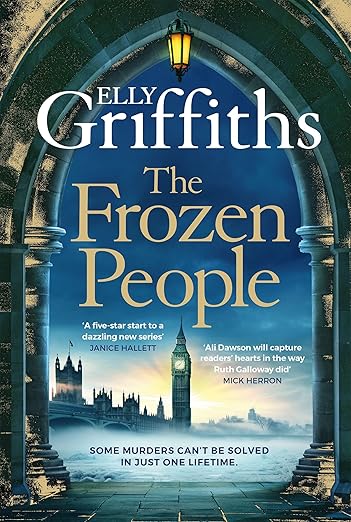
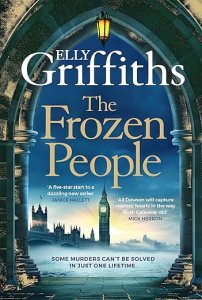
Ali Dawson and her cold case team investigate crimes so old, they’re frozen – or so their inside joke goes. Most people don’t know that they travel back in time to complete their research.
The latest assignment sees Ali venture back farther than they have dared before: to 1850s London in order to clear the name of Cain Templeton, the eccentric great-grandfather of MP Isaac Templeton. Rumour has it that Cain was part of a sinister group called The Collectors; to become a member, you had to kill a woman…
Fearing for her safety in the middle of a freezing Victorian winter, Ali finds herself stuck in time, unable to make her way back to her life, her beloved colleagues, and her son, Finn, who suddenly finds himself in legal trouble in the present day. Could the two cases be connected?
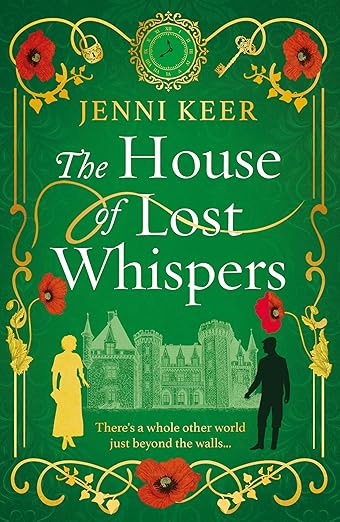
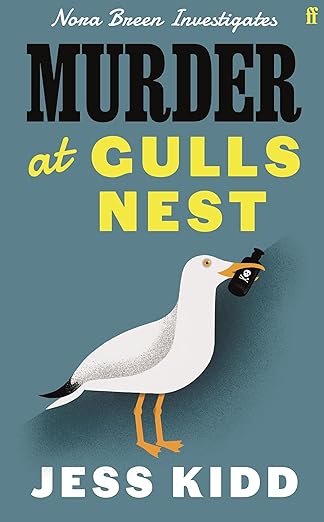
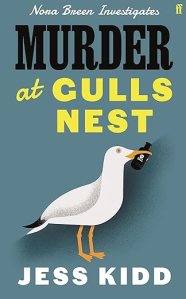
Somewhere in the north, a religious community meets for Vespers. Here on the southeast coast, Nora Breen prepares for braised liver and a dining room full of strangers.
After thirty years in a convent, Nora Breen has thrown off her habit and set her sights on the seaside town of Gore-on-Sea. Why there? Why now? Instinct tells her it’s better not to reveal her reasons straight away. She takes a room at Gulls Nest guest house and settles in to watch and listen.
Over disappointing – and sometimes downright inedible – dinners, Nora realises that she was right to keep quiet: her fellow lodgers are hiding something. At long last, she has found an outlet for her powers of observation and, well, nosiness: there is a mystery to solve, and she is the only person for the job.
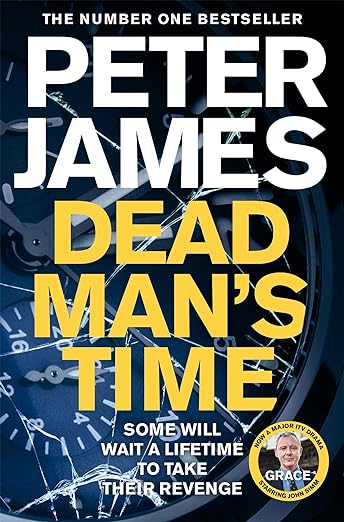
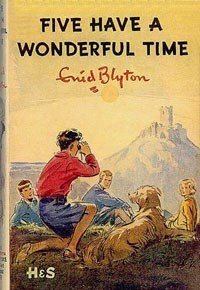
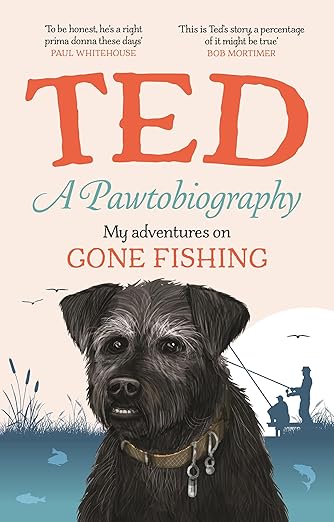
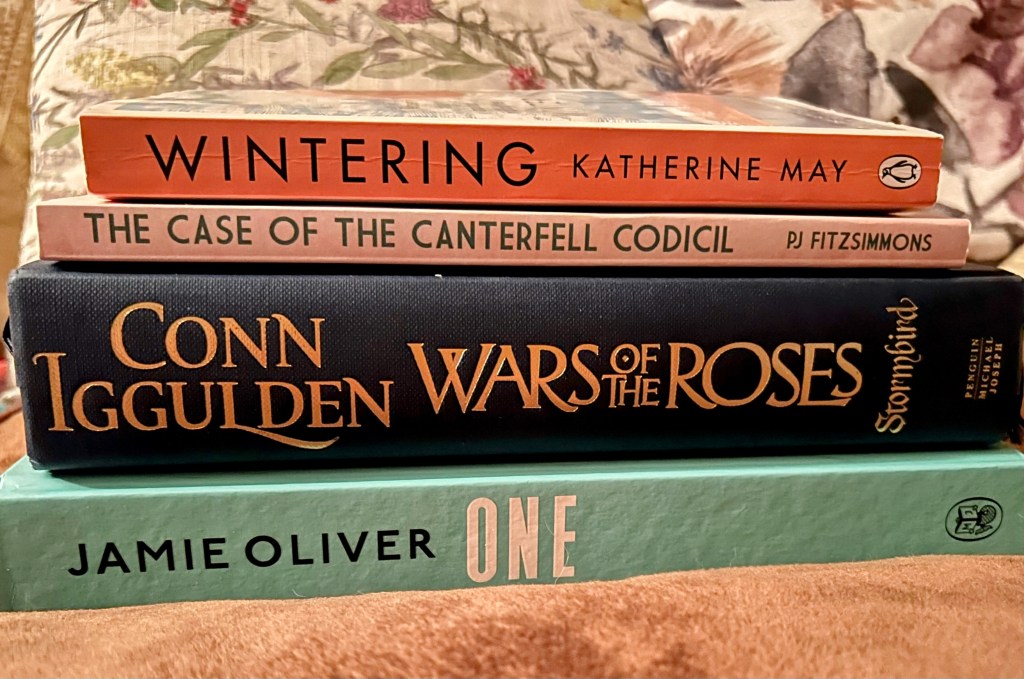
I’ve always loved books and whenever anyone asked me what I’d like for my birthday or Christmas the answer was always ‘books, please’ . So l was delighted this last Christmas to receive four books!
Two of them are books that were on my wish list and the other two were complete surprises.
I’ve got some of Jamie’s books, and this one looks like a good addition. In his introduction he writes ‘With a twinkle in my eye I want to position this book as one that is absolutely dedicated to the art of minimal washing up – you cook each recipe in just one pan or tray … it’s about making your life easier.’ I like the idea of minimal washing up and will be cooking quite a lot of these recipes.
It has over 120 recipes for tasty, fuss-free and satisfying dishes cooked in just one pan. What’s better: each recipe has just eight ingredients or fewer, meaning minimal prep (and washing up) and offering maximum convenience. With chapters including Veggie Delights, Celebrating Chicken, Frying Pan Pasta, Batch Cooking, Puds & Cakes, it all looks simply delicious.
Historical fiction has long been a great favourite of mine. I absolutely loved Sharon Penman’s The Sunne in Splendour that made me want to know more about the Wars of the Roses.So, when I found Iggulden had written a trilogy about the civil war I was keen to read it. I’ve read some of Iggulden’s other historical fiction novels and loved them, so I’m looking forward to reading this.
King Henry V – the great Lion of England – is long dead. In 1437, after years of regency, the pious and gentle Henry VI, the Lamb, comes of age and accedes to the English throne. His poor health and frailty of mind render him a weakling king -Henry depends on his closest men, Spymaster Derry Brewer and William de la Pole, Duke of Suffolk, to run his kingdom.
Yet there are those, such as the Plantagenet Richard, Duke of York, who believe England must be led by a strong king if she is to survive. With England’s territories in France under threat, and rumours of revolt at home, fears grow that Henry and his advisers will see the country slide into ruin. With a secret deal struck for Henry to marry a young French noblewoman, Margaret of Anjou, those fears become all too real.
As storm clouds gather over England, King Henry and his supporters find themselves besieged abroad and at home. Who, or what can save the kingdom before it is too late?
The Case of the Canterfell Codicil (Anty Boisjoly Mysteries Book 1) by PJ Fitzsimmons (not on my wish list). This was a complete surprise for me as I don’t know anything about this book, or the author. It’ll be good reading a new-to-me author and I do like locked room mysteries.
1920s gadabout Anty Boisjoly takes on his first case when his Oxford chum is facing the gallows, accused of the murder of his wealthy uncle.
Not one but two locked-room murders later, Boisjoly’s pitting his wits and witticisms against a subversive butler, a senile footman, a single-minded detective-inspector, an errant goat, and the eccentric conventions of the pastoral Sussex countryside to untangle a multi-layered mystery of secret bequests, ancient writs, love triangles, revenge, and a teasing twist in the final paragraph.
The Case of the Canterfell Codicil is a classic, cosy, locked-room mystery with an improbable plot inspired by Agatha Christie and prose in the style of an homage to PG Wodehouse.
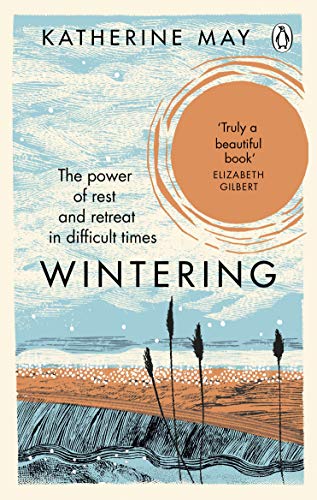
Wintering: The power of rest and retreat in difficult times by Katherine May (a surprise, not on my wish list). It’s a memoir covering quite a wide range of topics, not just about winter, or rest and retreat. I’ve seen this book is one people either praise it or criticise it, so I’m keen to know what I think of it.
Wintering is a poignant and comforting meditation on the fallow periods of life, times when we must retreat to care for and repair ourselves. Katherine May thoughtfully shows us how to come through these times with the wisdom of knowing that, like the seasons, our winters and summers are the ebb and flow of life.
A moving personal narrative interwoven with lessons from literature, mythology and the natural world, May’s story offers instruction on the transformative power of rest and retreat. Illumination emerges from many sources: solstice celebrations and dormice hibernation, C.S. Lewis and Sylvia Plath, swimming in icy waters and sailing arctic seas.
Ultimately, Wintering invites us to change how we relate to our own fallow times. May models an active acceptance of sadness and finds nourishment in deep retreat, joy in the hushed beauty of winter, and encouragement in understanding life as cyclical, not linear. A secular mystic, May forms a guiding philosophy for transforming the hardships that arise before the ushering in of a new season.




 BooksPlease