Top 5 Tuesday was created by Shanah at Bionic Book Worm, and it is now being hosted by Meeghan at Meeghan Reads. For details of all of the latest prompts for April to June, see Meeghan’s post here.
Today the topic is top 5 books with stars on the cover. One of my favourite paintings is Vincent Van Gogh’s Starry Night, so I’ve chosen books about the painting, Van Gogh’s life, about his time in an asylum, historical fiction, and two children’s books.
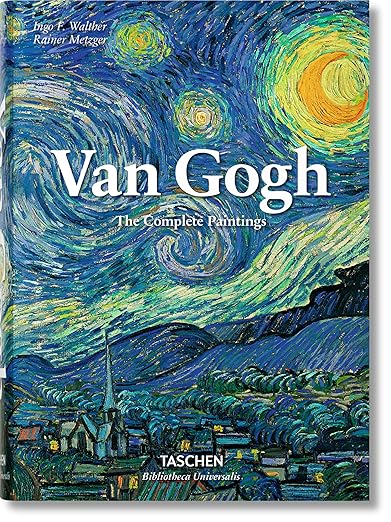
Van Gogh. The Complete Paintings by Ingo F. Walther and Rainer Metzger
Vincent van Gogh’s story is one of the most ironic in art history. Today, he is celebrated the world over as one of the most important painters of all time, recognized with sell-out shows, feted museums, and record prices of tens of millions of dollars at auction.
Yet as he was painting the canvases that would subsequently become these sell-out modern masterpieces, van Gogh was battling not only the disinterest of his contemporary audiences but also devastating bouts of mental illness, with episodes of depression and paralyzing anxiety which would eventually claim his life in 1890, when he committed suicide shortly after his 37th birthday. This comprehensive study of Vincent van Gogh (1853–1890) pairs a detailed monograph on his life and art with a complete catalogue of his 871 paintings.
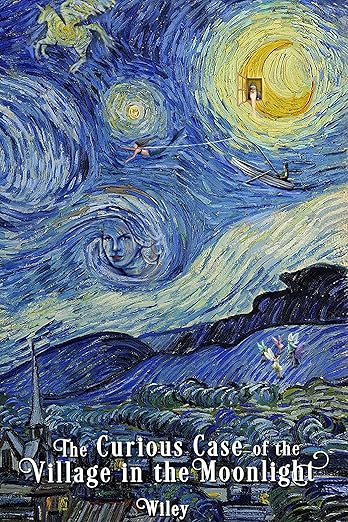
The Curious Case of the Village in the Moonlight by Steve Wiley.
Newly admitted patient Vincent Van Gogh watched as the first stars of what would become The Starry Night blinked to life over the sleepy village of Saint-Rémy.
In that village lived a lamplighter. That notorious starry night would be his last one on the job. The town was scheduled to be wired with a new and innovative technology called ‘electricity’ the following day. The lamplighter began his last night of work at the village tavern during green hour — an absinthe-drenched celebration in his honor. Green hour would transform the night from familiar to fantastical, with the village street lamps mysteriously vanishing. The lamplighter finds himself swept away on a wonderfully strange adventure to find and light the lost lamps, one that will take him from the depths of wish-filled rivers to the heights of the star-filled sky. Along the way, the lamplighter finds help from a curious cast of characters including the Man in the Moon, an ages-old cypress tree, and the wind itself. It will take all of them to find the lost lamps, and a lost love.
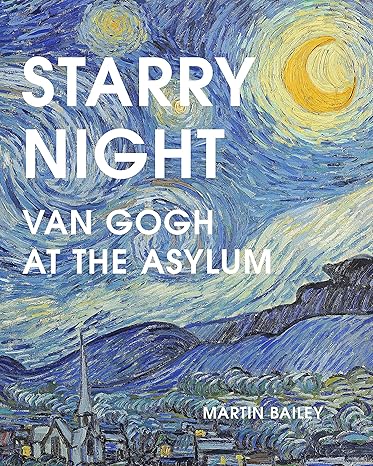
Starry Night: Van Gogh at the Asylum by Martin Bailey
Starry Night is a fascinating, fully illustrated account of Van Gogh’s time at the asylum in Saint-Remy, during which he created some of his most iconic pieces of art.
Despite the challenges of ill health and asylum life, Van Gogh continued to produce a series of masterpieces – cypresses, wheatfields, olive groves and sunsets during his time there. This fascinating and insightful work from arts journalist and Van Gogh specialist Martin Bailey examines his time there, from the struggles that sent him to the asylum, to the brilliant creative inspiration that he found during his time here.
He wrote very little about the asylum in letters to his brother Theo, so this book sets out to give an impression of daily life behind the walls of the asylum of Saint-Paul-de-Mausole and looks at Van Gogh through fresh eyes, with newly discovered material.
An essential insight into the mind of a flawed genius, Starry Night is indispensable for those who wish to understand the life of one of the most talented and brilliant artists to have put paintbrush to canvas.
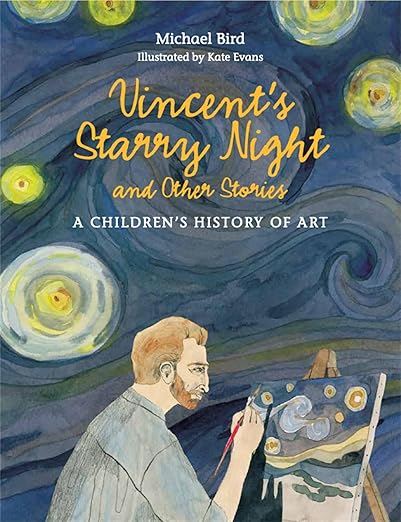
Vincent’s Starry Night and Other Stories: A Children’s History of Art by Michael Bird
An enthralling journey through 40,000 years of art, from prehistoric cave paintings right up to the present day. Discover artists and their art around the world, in exciting and imaginative tales about artists and the way they created their work.
Written by educator and art historian Michael Bird, and illustrated by Kate Evans, the book also features reproductions of the famous artworks discussed, a comprehensive timeline of events, and extra feature spreads on places connected with art.
This is a beautiful and engaging introduction to art for any home or school library.
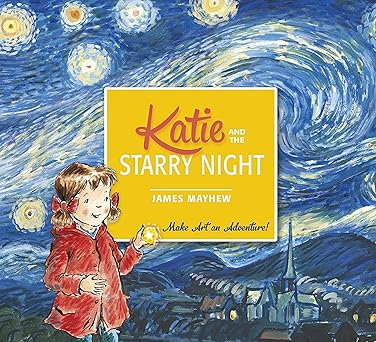
Katie and the Starry Night by James Mayhew
Join Katie as she steps into some of the most famous paintings in the world for an exciting art adventure!
The stars in Vincent van Gogh’s painting are so beautiful that Katie can’t resist reaching in and taking one. But what will she do when all the other stars come tumbling out of the painting, too? Will Katie be able to catch the stars before the gallery guard notices they’ve floated away?




 BooksPlease